Flood-Exposed U-Line Outdoor Refrigeration: Do Not Power It On
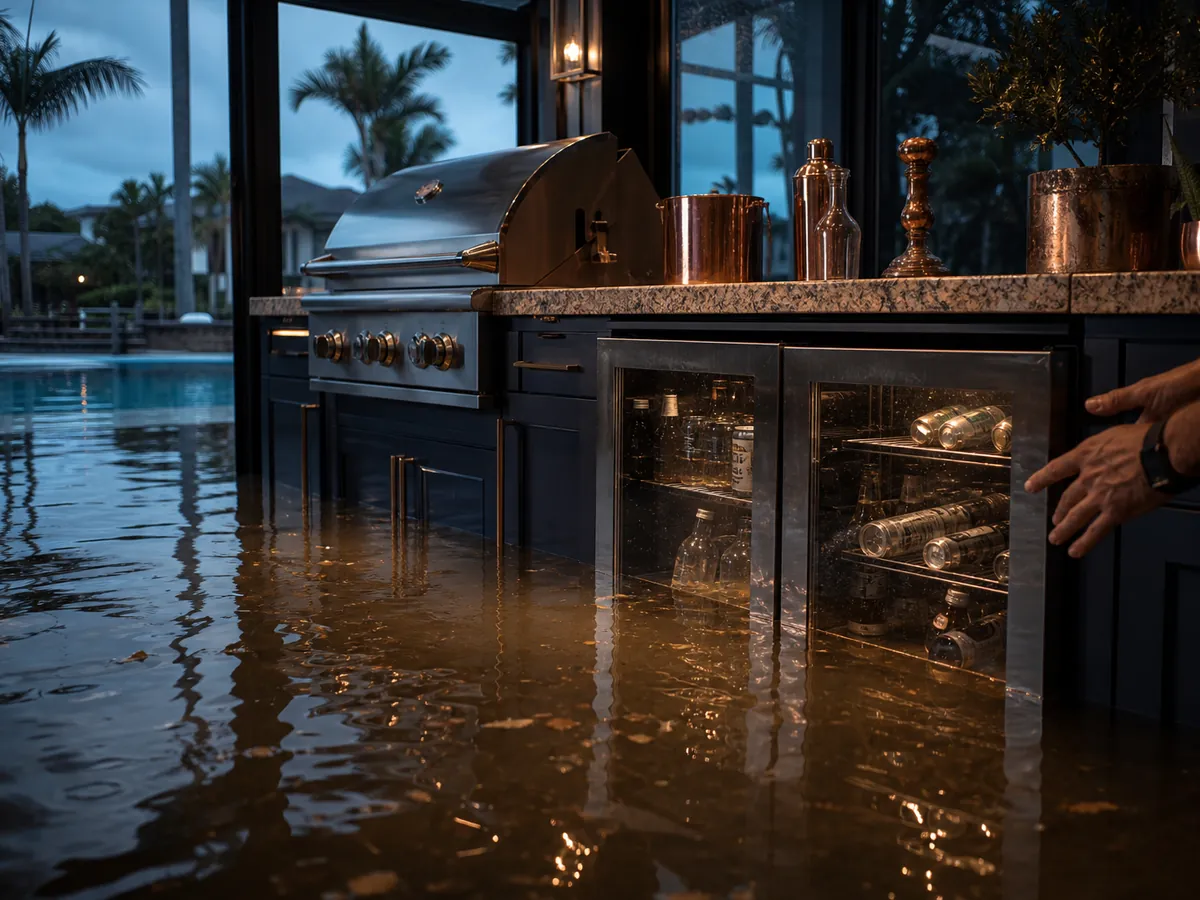
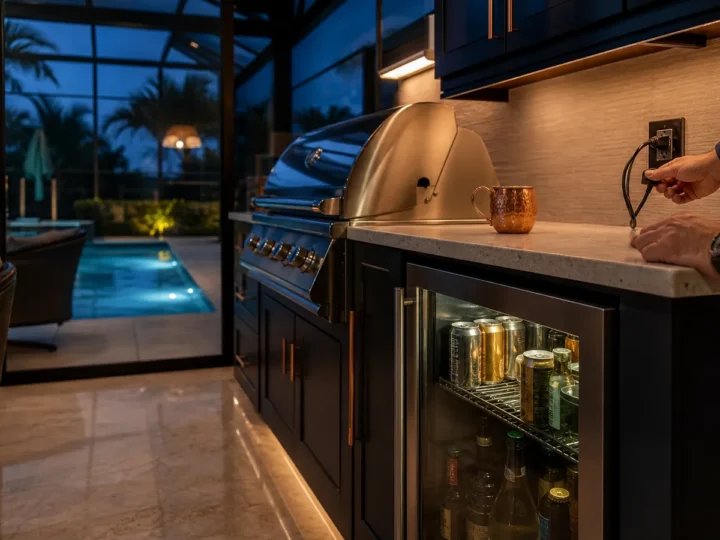
If flood water or storm surge reached your U-Line outdoor refrigeration, do not plug it in or switch it on. Water and contamination inside the cabinet, wiring and controls can cause shock, a short circuit or a fire, and powering up can turn a repairable unit into a total loss. Leave it off until a qualified technician has inspected it.
Why is powering on a flooded unit so risky?
An outdoor refrigerator contains a compressor, a fan motor, a control board, wiring and a power cord. Flood water is rarely clean. In Tampa Bay, surge water near the coast is salty and carries silt, sewage and chemicals. When it dries, salt and residue stay behind and can conduct electricity where they should not.
Switching on a unit with wet or contaminated wiring can trip the breaker, burn out the control board or energize the metal cabinet. The danger is to you as well as to the appliance. A unit that looks dry on the outside can still hold water in the base, behind the grille and inside the insulation.
What should you do first, in what order?
Safety comes before salvage. Follow these steps in order.
- Stay out of standing water and do not touch the unit until the power supply to that area has been shut off at the main panel. If you cannot reach the panel safely, ask a licensed electrician.
- Switch off the breaker that feeds the outdoor outlet, then unplug the cord only once the area is dry and the power is confirmed off.
- Do not press buttons or test the display to see whether it still works.
- Take photos of the unit, the water line and the surroundings for your records.
- Remove food and drinks, and handle them as you would food from any flooded kitchen: discard anything that touched flood water.
Do not try to dry the unit with a hair dryer or fan and then switch it on. Surface drying does not reach the places that matter.
What does a technician check?
A technician starts with the electrical side, checking the cord, outlet, circuit protection and wiring for moisture, corrosion and residue before anything is energized. Next comes the control board and the connections that feed the fan and compressor. The sealed refrigerant system is not opened for a flooded unit unless it shows damage, and that work belongs to someone holding EPA credentials for refrigerant handling.
After the inspection, you get an honest picture of whether the unit can be cleaned and returned to service or whether parts that sat in salt water are too far gone. We give you a written price before any work starts, and the decision stays with you.
| Part | Why flood water matters | What happens next |
|---|---|---|
| Power cord and outlet | Wet or corroded contacts can short or overheat | Inspect and replace if damaged; outlet checked by an electrician |
| Control board and display | Moisture and salt residue can damage circuits | Inspect; replace if corrosion is present |
| Fan motors | Water in windings can cause failure on startup | Test with power off first, then decide |
| Cabinet insulation | Can hold water and odors after drying | Evaluate; saturated insulation often means replacing the cabinet |
| Door seals and shelves | Surface contamination | Clean and sanitize or replace |
Is the unit worth saving?
Sometimes yes, sometimes no. Fresh water that reached only the base and left quickly is a very different case from salt water that stood in the cabinet for hours. A technician can tell you what is cleanable and what is not. Corrosion tends to keep spreading after the water is gone, so an item that works today may fail weeks later if the inspection missed damaged wiring.
If you carry homeowner or flood coverage, ask your insurer what documentation they want. We cannot tell you what a policy covers, but we can provide a written inspection result and a price for the work. Your U-Line warranty terms are worth checking too, since most manufacturer warranties treat flood damage as outside normal use. Check your warranty terms or ask us.
How can you protect outdoor units before the next storm?
Before hurricane season, which runs June 1 to November 30, think about where the unit sits and where water would go. Elevating the unit on a base, keeping the outlet above likely water levels and unplugging the unit before a storm are simple steps. If an evacuation is called, switch off the breaker feeding the outdoor kitchen and empty the unit.
After the storm, do not return power to the lanai until the area is dry and an electrician or technician has confirmed it is safe. Rushing to get the bar working again is understandable, but a cleaned and inspected unit is worth the wait.
Frequently asked questions
Can I dry the unit out and try turning it on?
No. Drying the surface does not remove water from wiring, the base or insulation. Powering on a unit with hidden moisture can cause a short or shock. Leave it unplugged and let a technician inspect it with the power confirmed off.
What if only a little water touched the bottom?
Even a small amount can reach the fan, wiring or the base where the compressor sits, and salt water does lasting damage. Treat any contact as a reason for inspection. If the water was fresh and brief, repair is more likely, but a technician should decide.
Is the food still safe if the unit was flooded?
Discard food and drinks that touched flood water, including containers you cannot sanitize. For other food, use a thermometer and time since power loss, following USDA guidance, rather than judging by appearance.
Will an electrician or a refrigeration technician handle this?
Often both. An electrician checks the circuit and outlet, while a technician inspects the appliance. Start by switching off the power to the area, then tell us what happened and what the water reached.