Why a Dirty U-Line Ice Maker Is a Health Issue
Ice is food. If your U-Line ice maker has slime, mold or a musty smell, that growth can end up in every glass, so stop using the ice, empty the bin and clean the unit before you serve any more. Warm, wet and dark areas inside an ice maker are the places where biofilm grows, and Florida humidity makes the problem easier to start.
Why does an ice maker grow slime and mold?
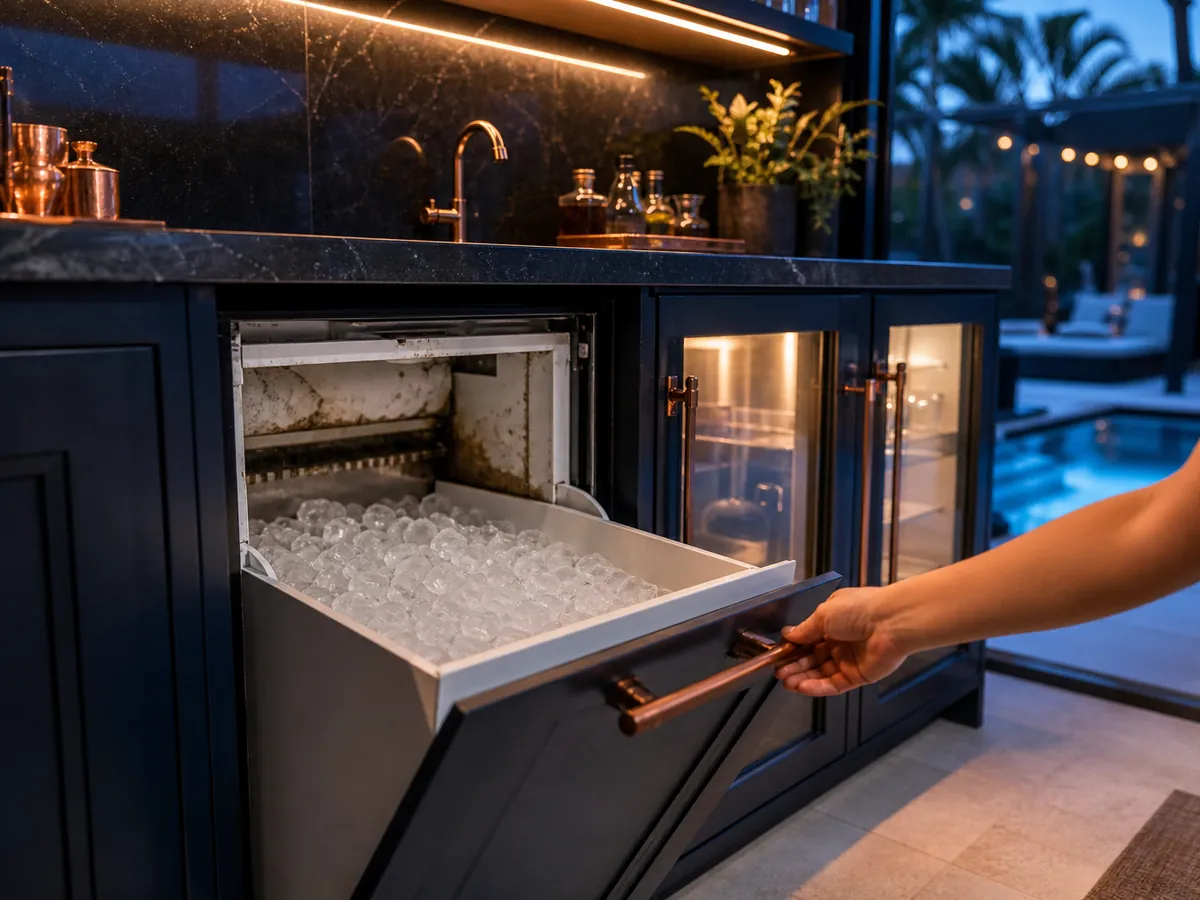
An ice maker keeps water in motion and in contact with surfaces in a part of the house that is often warm. Moisture, a little mineral residue and traces of food or airborne spores are enough for microbes to settle. Over time they form a slick film, called biofilm, on the water reservoir, the bin and the walls.
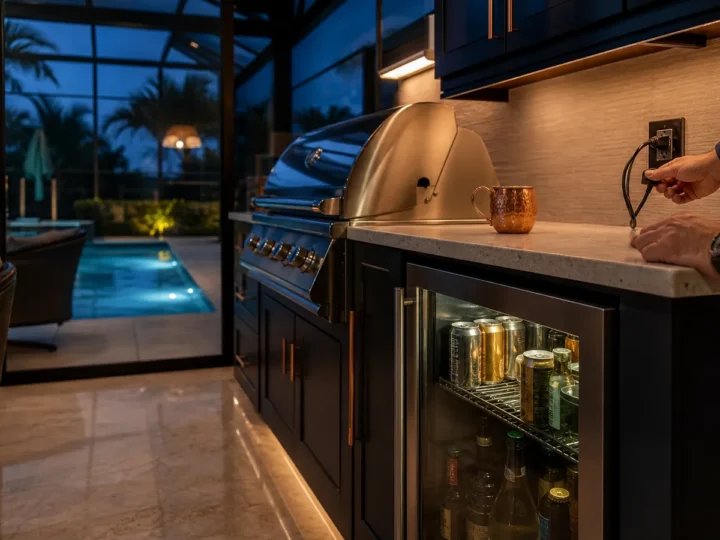
Tampa Bay homes add several risk factors. The air is humid for most of the year. Bar areas are used in bursts, so water can sit still between parties. Seasonal residents often leave ice makers off for months with the door shut, which gives mold a quiet place to grow. A unit on an outdoor lanai also sees pollen, dust and insects.
Biofilm is hard to see at first. Pink, orange, gray or black spots, a slippery feel on the bin walls, cloudy ice or an off taste are all signs. A musty smell when you open the door counts too.
What do you do first if you find growth?
Start with safety. Unplug the ice maker or switch off its breaker, and shut the water supply valve if you plan to remove parts. Let the unit warm to room temperature so you are not working with frozen surfaces.
- Throw away all the ice in the bin, and do not give it to anyone.
- Remove the bin and any removable shelf or scoop.
- Wash the removable parts in warm water with mild dish soap, rinse them well and let them air dry.
- Wipe the visible interior with a soft cloth and the same soap solution, then rinse with a cloth dampened in clean water.
- Check the drain area and the door seal, where residue collects.
Follow your use-and-care guide for any sanitizing step, including what cleaning solution it allows and how long to rinse. Do not mix cleaning products, and do not use harsh chemicals that the guide does not name. Run the first few batches of ice after a cleaning cycle and discard them.
How often should you clean it?
The right schedule depends on how much ice you use and the environment around the unit. The table below is a general plan; your guide sets the specific schedule for your model.
| Task | How often | Notes |
|---|---|---|
| Empty and wash the ice bin | Regularly, and any time the ice sits unused for long | Dish soap, warm water, rinse, dry |
| Wipe interior walls and seal | With each bin wash | Soft cloth only |
| Full clean per the guide | As the guide specifies | Use only products the guide lists |
| Replace the water filter | As the filter instructions say | Old filters stop doing their job |
| Clean the grille and surroundings | Several times a year | Dust in the grille harms cooling |
| Shut down before long absences | Each time | Empty, clean, dry and leave the door ajar if the guide allows |
Is the ice safe to use after cleaning?
If the unit is clean, the water supply is good and the ice looks and tastes normal, it should be fine to use again. If you had visible mold or a persistent smell, run and discard several batches before you resume. Anyone with a weakened immune system, young children and older adults are more sensitive to contaminated ice, so lean toward caution in a household with vulnerable members.
Ask yourself where the growth came from. If you cleaned the bin and the slime returns within days, the problem may be in the water line, the reservoir or a part you cannot reach. A filter that is overdue can also contribute. Private wells, common in rural parts of the area, can bring more minerals and microbes, so a household on well water may need more frequent cleaning and filter changes.
When should a technician handle it?
Call if slime or odor returns right away, if you see water pooling, if ice tastes bad after cleaning, or if the unit has been sitting wet in a closed cabinet for months. A technician can open the access panels, check the water inlet valve, reservoir, pump and drain, and clean areas the owner should not reach. We also check the unit’s cooling and drainage, since a drain that does not empty keeps the interior wet. A written price comes before any work starts.
For a unit damaged by flood water, do not clean and restart it. Water from outside carries contamination that ordinary cleaning cannot fix, and electrical parts need inspection first.
Frequently asked questions
Can I just run vinegar through my ice maker?
Only if your U-Line guide says so. Some cleaners are fine for certain models and harmful for others, and acid can damage seals or parts. Follow the cleaning method in the guide for your model, and rinse thoroughly.
Why does my ice taste or smell strange?
Ice absorbs odors from food in nearby storage and from biofilm in the bin or reservoir. An old filter can also affect taste. Empty the bin, clean the unit, replace the filter if it is due, and run fresh batches.
Is pink or black slime always mold?
Not always. Pink or orange film is often bacteria, and black spots may be mold. You cannot tell by looking, and the cleaning approach is the same. Discard the ice, clean the unit and do not serve ice until the growth is gone.
Should I leave the ice maker running while we are away?
For short trips, yes. For long absences, empty, clean and dry the unit and turn off the water supply, following the guide. Ice that sits for weeks picks up odors and can grow bacteria on its surface.