Wine Stored Warm After an Outage in a U-Line Wine Unit
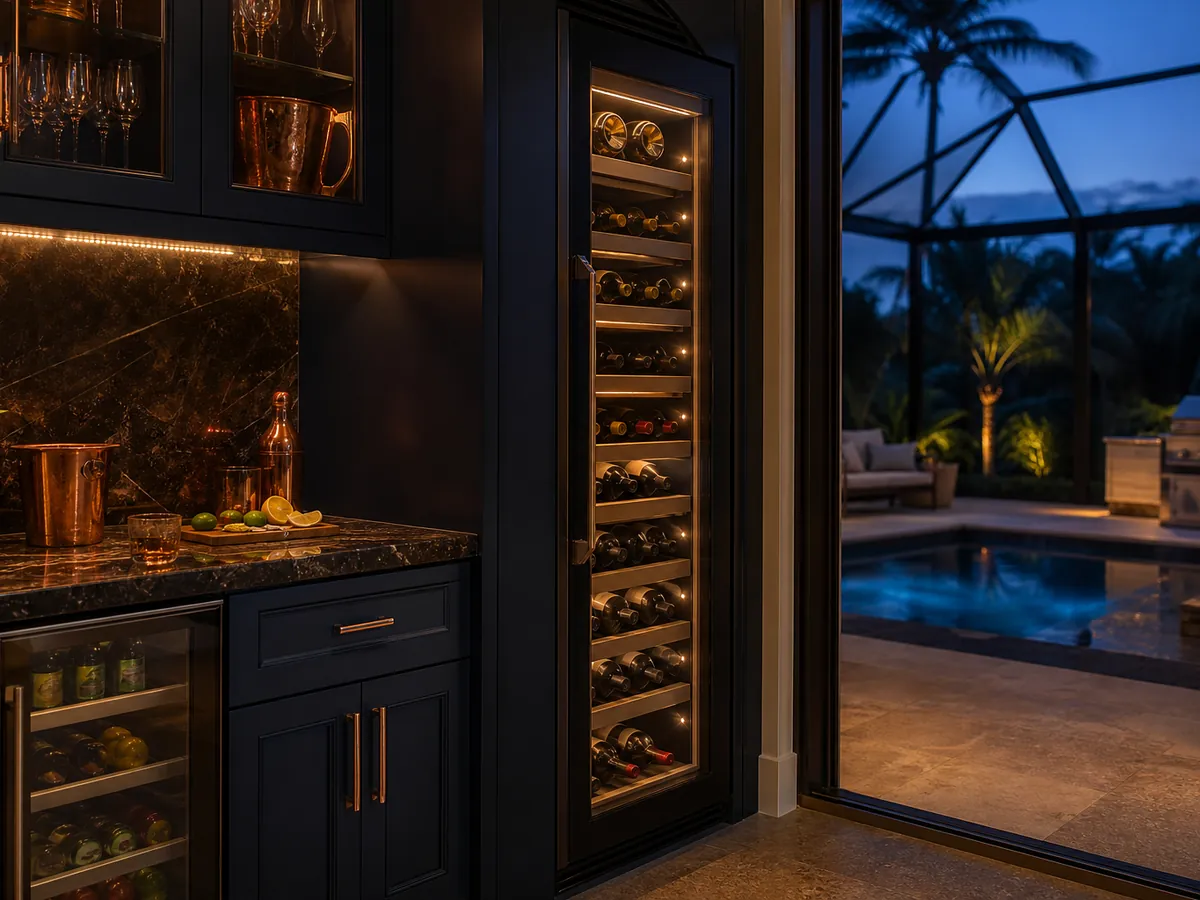
Wine that warmed up during an outage is not automatically ruined. Short periods at room temperature rarely hurt, but long exposure to Florida summer heat can change flavor, push out corks or leak. Check the cabinet temperature, how long it was warm and the condition of the bottles, then look at your U-Line wine refrigerator before you reload it.
What does heat actually do to wine?
Wine is sensitive to heat over time. A few hours at room temperature is far less harmful than days in a hot closet or garage. Warmth speeds up chemical changes, which can dull fruit flavors, add a cooked or jammy taste and age the wine faster than it should. Large swings between warm and cold can also stress the closure.
Signs of heat damage can include a cork that has moved up or pushed out of the neck, a stain or seepage around the closure or capsule, or wine that smells flat or stewed. A bottle that shows leakage is more likely to be affected, because air has reached the wine.
Different wines react differently. Delicate whites and sparkling wines are more sensitive than sturdy reds, and fine bottles you plan to age are worth more attention than everyday bottles. If a bottle is valuable to you, ask a wine professional or the seller about it. We repair refrigeration; we cannot judge a wine’s quality.
How do you judge what happened in your cabinet?
You need two facts: how warm the cabinet got and for how long. If you keep a thermometer in the unit, check its record. A thermometer that shows the high and low readings makes this simple. If you do not have one, estimate from the time the power was off, the room temperature and whether the unit sits in a cooled room, a garage or on a lanai.
A unit in an air-conditioned kitchen heats up more slowly than one on a lanai in July. Keep the door closed during the outage, because a closed cabinet holds its temperature longer. When power returns, do not open the unit every few minutes to check. Let it run and read the thermometer.
| What you observe | What it may mean | What to do |
|---|---|---|
| Short outage, cabinet near normal | Little effect on wine | Let the unit recover, check the thermometer |
| Long outage, cabinet warm | Possible change in flavor | Taste a less valuable bottle first; do not reload at once |
| Cork pushed out or seepage | Heat or pressure stress | Drink soon rather than store; keep upright |
| Cabinet still warm hours after power returned | Cooling problem | Check ventilation and grille; call a technician |
| Wet shelves or odor | Leaking bottle or condensation | Unplug, clean, dry, check the drain path |
What should you check on the unit?
Switch off the unit or unplug it before you do anything beyond looking. Then work through these checks in order.
- Confirm that the display shows the temperature setting you chose and that it has not reset to a different value.
- Clear anything blocking the front grille and make sure air can move around the cabinet.
- Clean dust from the grille with a soft brush or vacuum.
- Wipe the door seal and check that the door closes fully.
- Confirm the unit is level and not touching the cabinet sides.
After a surge, power can return in bursts. Unplugging the unit during a storm and plugging it in once the supply is steady helps prevent damage. Give the unit a few minutes after restart, or follow the waiting time in your guide.
When should you call a technician?
Call if the cabinet does not return to your set temperature after several hours, the unit runs without cooling, the display shows an error you cannot clear, or the fan does not run. A technician can test the controls, the fans and the cooling system, and explain what is wrong before any work starts.
If a bottle broke or leaked inside, the sugar and alcohol residue can leave sticky shelves and odors. Clean those spots with warm water and mild soap with the unit off. If liquid reached the electrical parts or the base, do not power it on; have it inspected first.
How can you prepare before the next outage?
Place a thermometer inside before hurricane season so you can read the cabinet temperature without guessing. Keep the bottles you care about most on a lower shelf where it stays steadier, and leave a little space between them so air moves. If a storm is on the way and you have time, consider moving your best bottles to a cooler place in the house, such as an interior closet away from outside walls.
Seasonal residents who leave the unit empty or off for months should clean it, dry it and leave the door slightly open if the guide allows, so the interior does not grow mold.
Frequently asked questions
How long can wine sit warm before it is damaged?
There is no single answer. Hours at moderate indoor temperatures usually matter little, while days in a hot space can change the wine. The wine type, the bottle and the exact temperature all matter, so judge by cabinet readings and, for valuable bottles, ask a wine professional.
Should I put warm wine straight back into the unit?
Let the unit recover first. Loading many warm bottles at once makes it work hard and slows cooling for everything in it. Add bottles in stages once the cabinet is back near its set temperature.
Can a power surge harm my wine unit?
It can harm the electronics. A surge when power returns may damage the control board, the fan or the compressor. Unplug the unit during a storm, wait until the supply is steady and ask an electrician about surge protection.
Will my food rules apply to wine?
Not in the same way. Wine is not a perishable food in the sense that meat or dairy is. The USDA temperature and time rules are for perishable food, so use them for what you keep in the beverage or food refrigerator.