Loud Fan or Vibration in Your U-Line Wine Refrigerator
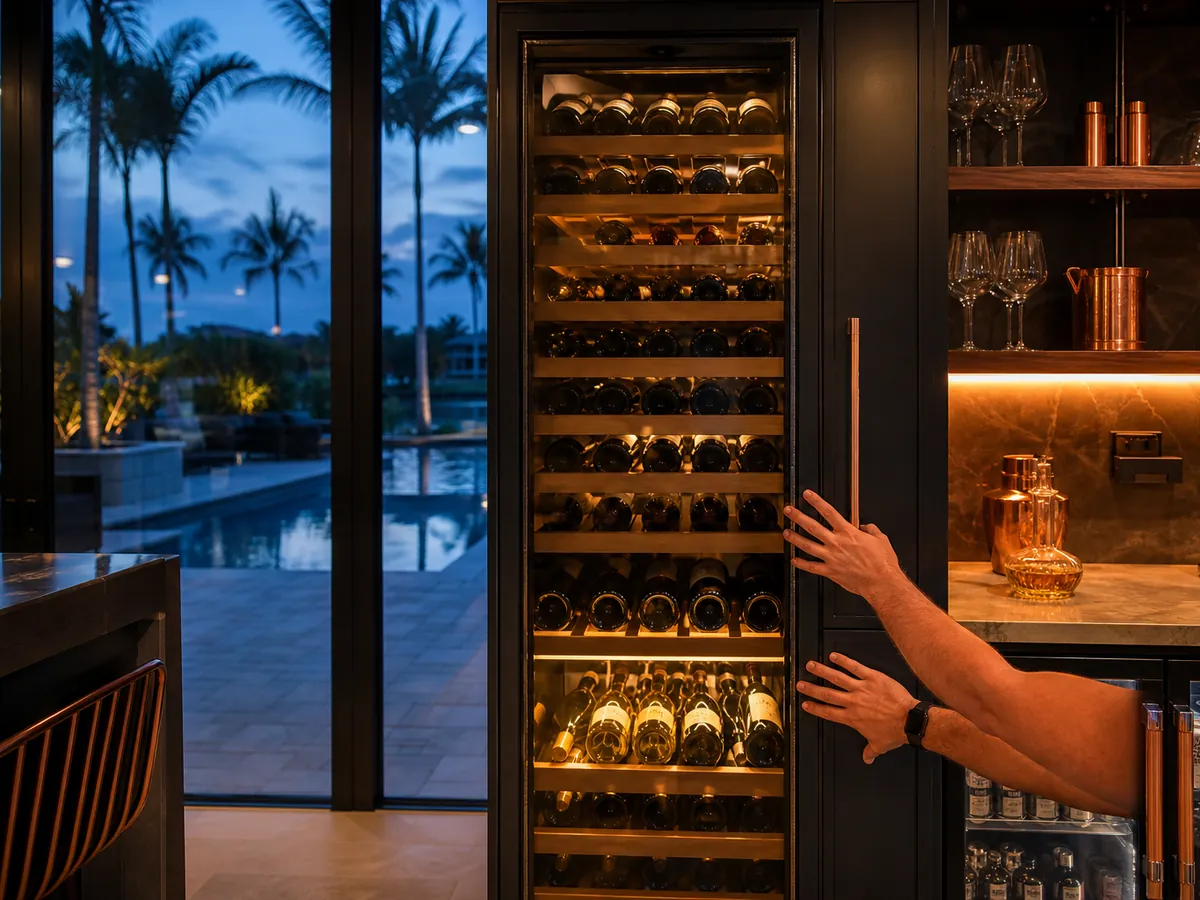
Most noise from a U-Line wine refrigerator comes from three places: a cabinet that is not level, bottles or shelves touching each other, or a fan that is dusty or rubbing. Level the unit, space the bottles, clean the grille with the power off, and listen again. A grinding or scraping that continues needs a technician.
Why does a wine refrigerator make noise at all?
A wine unit has a compressor, a fan that moves air across the coil, and sometimes a second fan inside the cabinet. All of them make some sound, and a quiet room makes it noticeable. Normal sounds include a low hum, a soft fan whoosh and an occasional click as the cooling cycle starts or stops.
The sounds worth chasing are new ones: a rattle, a buzzing that rises and falls, a high whine or a scrape. Vibration matters more for wine than for other drinks, because bottles that rest for years should not be shaken. Even if the noise does not bother you, a vibrating cabinet is worth fixing.
How do you level the unit and place bottles?
Always begin with the power off, and empty the unit if it is a freestanding model that is hard to move. Do not tilt a built-in unit.
- Check whether the cabinet rocks. Place a small level on top or on a shelf, then adjust the leveling feet at the front by hand or with the tool your guide describes.
- Look for contact between the cabinet and surrounding cabinetry, a wall or a neighboring appliance. Even a light touch can carry a hum into the wood.
- Rearrange bottles so none touches the back wall, the fan cover or another bottle neck. Glass on glass rattles.
- Seat each shelf fully in its guides. A shelf that sits crooked can buzz.
- Restore power, close the door and listen for a few minutes.
Hard flooring in a lanai bar or tile in a Florida kitchen carries sound more than carpet. A thin pad under the feet may help on a freestanding unit, but only if your guide allows it.
What can the fan itself be doing?
| Sound | Likely cause | What you can check | Next step |
|---|---|---|---|
| Rattle at the front | Loose grille, shelf or bottle | Grille seated, shelves in guides | Rearrange and test |
| Buzz that rises and falls | Cabinet touching an object, or an unlevel base | Gaps around the cabinet, level | Adjust feet |
| Steady whir that is louder than before | Dust on the fan or coil | Vacuum the grille, power off | Clean and retest |
| Scraping or ticking | Something touching a fan blade | Visible items near the fan cover | Call a technician |
| High whine or grinding | Worn fan motor or bearing | Nothing safe to open | Call a technician |
Only vacuum or wipe what is visible. Do not remove the fan cover, bend a blade or oil a motor. Moving parts and live wiring sit just behind the cover.
How does Florida heat affect the noise?
When a room runs hot, the cooling system works longer and louder. A wine unit tucked into a closet or a tight cabinet in a warm part of the house gets little airflow, so the fan speeds up and the cabinet hums. Clearances in your guide exist for this reason. Dust and pet hair gather fast near the grille, and a clogged coil makes the fan work for longer stretches.
If you close the house for months and come back to a warm room, expect the unit to run loudly for a while as it pulls down the temperature. Check the thermometer inside before deciding the noise is a defect.
When should you call a technician?
Call when leveling, spacing and cleaning change nothing, when the sound is grinding, scraping or a persistent whine, or when the unit also runs warm or frosts up. A technician listens at the cabinet, inspects the fan and its mounts, tests the motor and checks the sealed system. The goal is to protect the wine as well as stop the noise, so tell us how many bottles are inside and whether any are valuable.
While you wait, keep the door closed and watch the temperature. If your unit is still under warranty, check your warranty terms before service; independent service does not by itself void a warranty.
Frequently asked questions
Is vibration harmful to wine?
Steady vibration is not what long-term storage calls for, so it is worth reducing. A small hum that does not shake the bottles is common, but visible shaking or rattling glass should be fixed.
Can I move a built-in wine refrigerator to fix the noise?
Not on your own. Built-in units are fitted to the cabinet and can have connections behind them. Ask us to check clearances and fitting instead of pulling the unit out.
Why is it louder at night?
Quiet surroundings make the same sound easier to hear, and the unit may run longer after a warm day. If the volume has changed compared with last month, check the grille and spacing.
Does a full unit make more noise?
A fuller cabinet can change airflow and cause bottle contact, so noise may shift. Leave a little space around the fan and between bottle necks, and avoid stacking items on top of the unit.