Water Under a U-Line Undercounter Unit: Where It Comes From
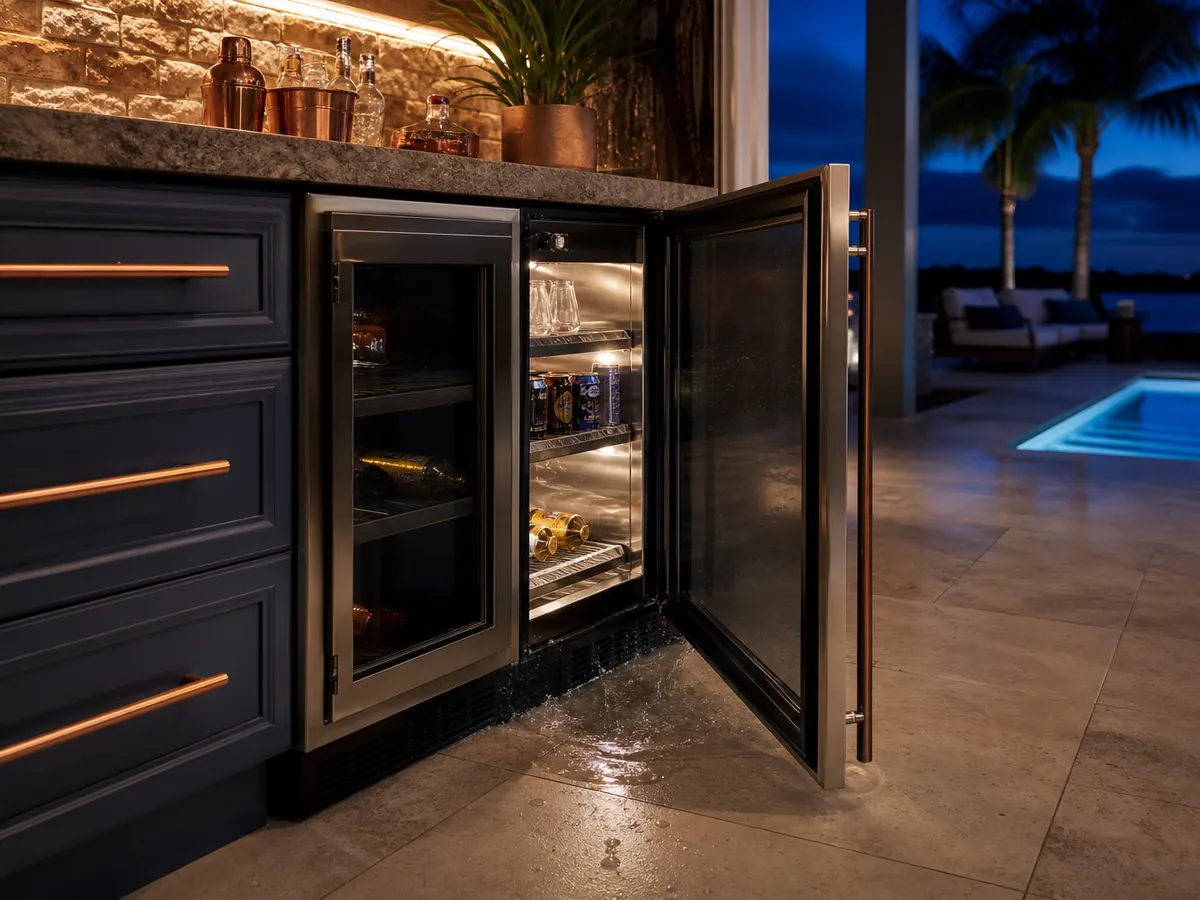
Water under a U-Line undercounter unit has a short list of sources: a blocked or loose drain line, a door seal that lets humid air in, an ice maker water line, or condensation. Dry the floor, unplug the unit, look for the wettest spot and shut off the water supply if the unit has one. Keep checking until the source is clear.
How do you find where the water is coming from?
Start by drying the floor and placing a sheet of paper towel under the unit. Water that returns on the towel tells you where to look. Before you touch anything, unplug the unit or switch off its breaker, and if there is an ice maker or water line, close its shutoff valve. Stand on a dry surface and keep power away from puddles.
Then look at the pattern. A slow drip under the front edge is different from a pool at the back. Water at the front often comes from the door or drawer area or from a drain that backs up. Water at the back often comes from a supply line or drain connection. A small damp patch under a long-running unit may be nothing more than condensation.
Which source fits what you see?
| Where and when | Likely source | What you can check |
|---|---|---|
| Front edge after the door was open often | Condensation or a seal that leaks air | Wipe the gasket and check closure |
| Steady drip at the front or back | Drain line blocked, kinked or loose | Look at the visible line path only |
| Pool at the back, only when the ice maker runs | Ice maker supply line or fitting | Close the valve and look for wet fittings |
| Water inside the cabinet bottom | Drain pan overflow or blocked drain | Look for a full tray, clear visible debris |
| Water on hot, humid days only | Excess condensation | Room humidity, door habits, level |
Do not pull the unit out by its supply or drain connections. Built-in units can have fittings behind them that bend or break.
What do condensation and the door seal have to do with it?
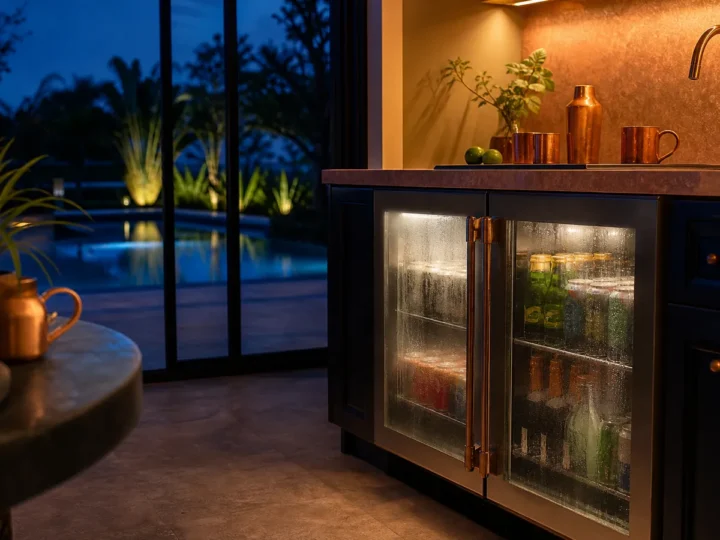
A cold cabinet in a muggy room produces moisture. If the gasket is dirty, folded or worn, warm air enters, and the water it carries condenses inside and drips to the floor. In Tampa Bay, humid summers make this easy to trigger, especially on a lanai bar or a kitchen with the air conditioning raised while you are away.
Clean the gasket with a damp cloth and mild soap, then dry it. Make sure bottles and drawers do not hold the door open. Confirm the unit is level, since a tilt can pull the door away from the seal. A gasket that is torn or hardened needs replacement by a technician.
What about the drain and the ice maker line?
Many U-Line undercounter ice makers and some refrigeration models have a drain, either a gravity line or a drain pump. A pump sits behind a panel and is not for owner work. A drain can clog with mineral deposits or debris, and the water then overflows into the cabinet or onto the floor. Hard water, private wells and neglected filters all raise the risk.
An ice maker supply line can loosen, crack or leak at a fitting. If water appears only when the ice maker fills, close the valve, leave the unit off and call. A technician checks the inlet valve, the fittings, the drain path and the pump. Water that has reached the floor may also damage cabinetry and flooring, so dry it quickly and keep an eye on the cabinet base.
When should you call a technician?
Call when water returns after you dry the floor, when it looks like it comes from a fitting or the drain, when the cabinet bottom is wet, or when the unit trips a breaker or GFCI. A damp floor near a plugged-in appliance is a shock risk, so stay off the wet area and switch off the breaker from a dry spot. Tell us where the water collects and whether the ice maker was running.
Check your warranty terms if the unit is new; independent service does not by itself void a warranty.
Frequently asked questions
Is a small amount of moisture under the unit normal?
A faint dampness in a humid room can be condensation. Water that forms a puddle, comes back after drying or stains the cabinet is not normal and should be traced.
Can I use the unit while I wait for service?
If the source is the ice maker or a supply line, turn the water off and leave the ice maker off. If the floor is wet around the plug, leave the unit unplugged until the area is dry and checked.
Will water damage the floor under the cabinet?
It can, especially wood, laminate and the cabinet base. Dry it promptly with towels and a fan, and check for swelling or stains over the next few days.
Could a clogged filter cause a leak?
A clogged filter does not usually leak by itself, but it can raise pressure on fittings or cause odd flow. Replace filters on the schedule in your guide.