Ice Buildup in a U-Line Freezer Drawer: What to Check
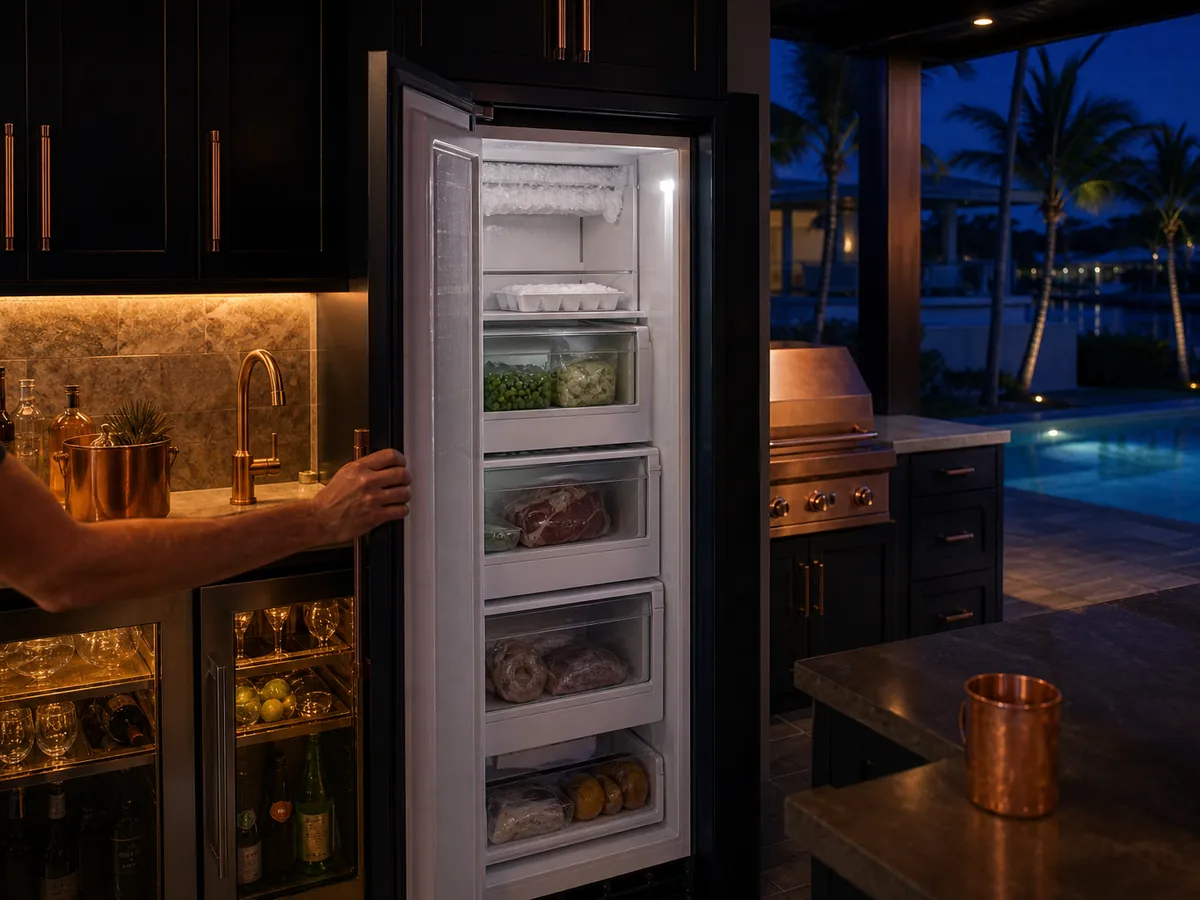
Ice in a freezer drawer almost always comes from moisture: humid air entering through an open or poorly sealing drawer, or water from food that was not wrapped. Check the drawer closes fully, the seal is clean and the contents are covered. Thick ice on the back wall or a freezer that is not cold calls for service.
Where does the ice come from?
Freezers are dry inside only as long as the air stays out. Each time a drawer opens, humid room air flows in, meets cold surfaces and freezes as frost. In Florida, that air carries more water than in a dry climate, so frost forms faster. A thin, even layer of frost is a normal result. Thick lumps, sheets or ice that fuses the drawer to the cabinet are not.
The location of the ice tells you something. Ice around the front edge and gasket points to the seal or the way the drawer closes. Ice on the back wall or over the cooling surface can point to the defrost system or a cooling problem. Ice on top of packages usually comes from open containers.
What can you check safely?
Switch off the freezer or unplug it before you touch ice, and keep food in a cooler with ice while you work.
- Drawer closure: make sure items are not sitting above the rim, so the drawer shuts all the way.
- Gasket: look for tears, folds or a stiff, flat edge. Wipe it with a damp cloth and dry it.
- Level: a unit that leans forward or back can leave the drawer slightly open.
- Contents: wrap food well and seal liquids, so moisture does not escape into the air.
- Door habits: open less often and close quickly, especially on humid days.
- Drain and surroundings: look for water on the floor that suggests meltwater is escaping.
Never chip ice off the walls with a knife or screwdriver, and do not use a hair dryer near a cabinet with water on the floor. Sharp tools can puncture the cooling lines, which ends the life of the unit.
How do you tell ordinary frost from a problem?
| What you see | Meaning | What you can do | When to call |
|---|---|---|---|
| Light frost on walls | Normal moisture from door openings | Wipe off during cleaning | Not needed |
| Ice around the drawer edge | Gasket or closure problem | Clean seal, check fit | If it returns |
| Ice fusing the drawer shut | Repeated thaw and refreeze | Defrost per your guide | If it forms again |
| Thick ice on the back wall | Defrost or cooling problem | Check temperature with a thermometer | Soon |
| Ice plus soft food | Freezer not holding temperature | Move food to a cooler | Right away |
How do you defrost it correctly?
Follow your use-and-care guide for your model. In general, the steps are the same. Move food to a cooler, turn the unit off, leave the drawer open with towels around the front, and let the ice melt on its own. Wipe the interior, dry the gasket, then restart and wait for the temperature to settle before restocking.
If you travel for weeks, empty and defrost the freezer first. Food left in an unplugged freezer will thaw, and a closed, wet cabinet grows odors and mildew in a humid home. Prop the drawer slightly open only if your guide supports that for storage.
What food safety steps matter?
If frozen items have partly thawed, do not judge by appearance. Use a thermometer and the USDA guidance on temperature and time for frozen food. Meat, seafood and dairy are the items to be strict about. When you cannot say how long food was warm, discard it. Do not refreeze items unless the guidance says it is acceptable.
When should you call a technician?
Call when ice returns soon after defrosting, when the back wall frosts thickly, when the freezer is not cold or runs without rest, or when you hear the fan or compressor change. We check the defrost parts, the sensors, the fan and the sealed system. We also look at the gasket, hinges and drawer slides, because a drawer that no longer closes squarely lets in air all day.
These are not owner repairs. If warranty coverage may apply, check your warranty terms; independent service does not by itself void a warranty.
Frequently asked questions
Is a freezer drawer supposed to be frost free?
That depends on the model. Check your guide. If it states automatic defrost, thick ice is not normal. If it calls for manual defrost, expect to defrost on a schedule.
Can I keep using the freezer with ice in it?
For a short time, if the temperature is steady and the drawer closes. Thick ice that grows each week deserves attention, because it will keep getting worse.
Why does ice form faster in summer?
Humid Florida air carries more water, so every door opening brings more moisture to freeze. Keep openings short and the seal clean.
Should I put a bowl of baking soda inside?
It can reduce odors, but it does not stop frost. Moisture control comes from sealing food and keeping the drawer closed.