Setting Up a U-Line Wine Refrigerator for Florida Homes
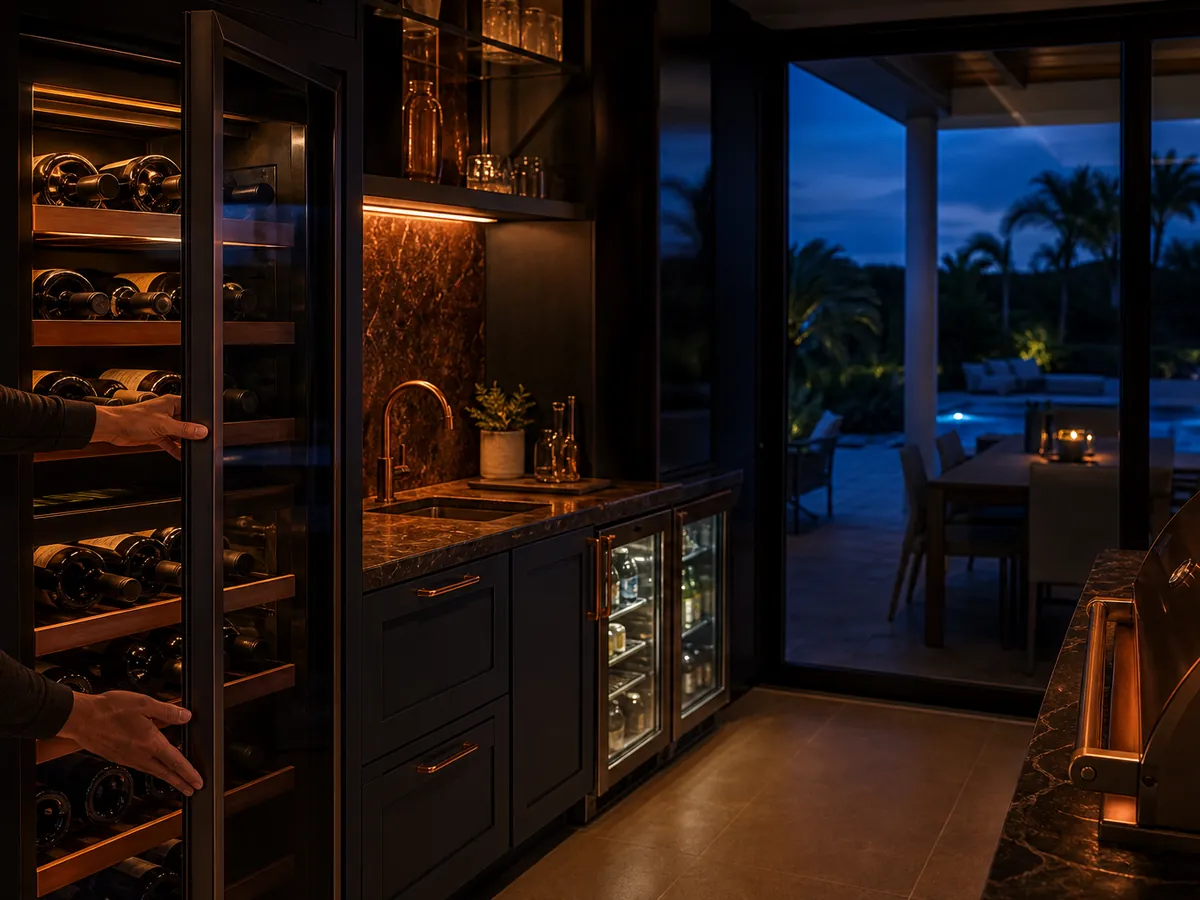
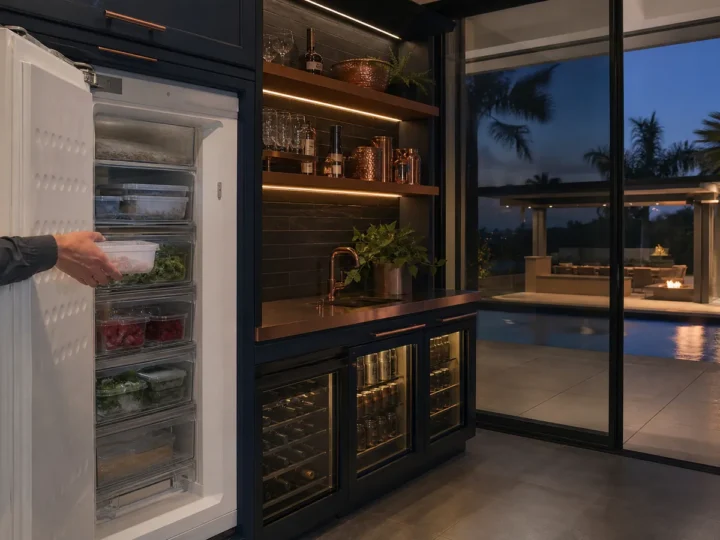
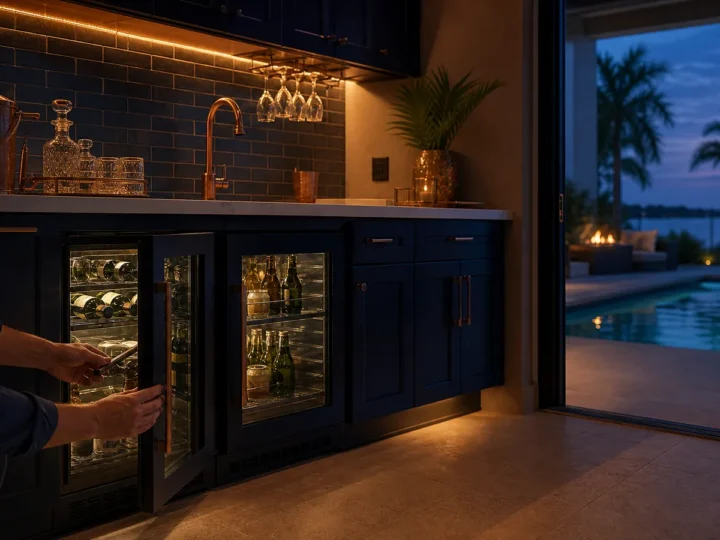
Set up a U-Line wine refrigerator away from heat and direct sun, give it the clearance its guide asks for, set each zone to the temperature that suits the wine style, and keep the unit level and still. In Florida, heat and humidity make placement and airflow the biggest decisions, more than any single setting.
Where should the unit go in a Florida home?
Wine is sensitive to heat swings, light and vibration, and a refrigerator can only do so much against a hostile room. Pick a spot out of direct sun, away from the oven wall, the dishwasher and any outdoor-facing door that bakes in the afternoon. A sunroom or lanai-side nook may look attractive, but it asks the unit to work against the hottest air in the house.
Check whether your model is built for undercounter, freestanding or built-in use. Front-breathing models need the front grille unblocked so air can pass through, while freestanding units may need space at the sides and back. Your use-and-care guide gives the clearances, and ignoring them is the quickest way to shorten the life of the unit.
Level the cabinet using its leveling feet. A unit that rocks or leans can make the door hang open a hair, and the seal fails to close.
How do you choose zone temperatures?
Many U-Line wine models offer more than one zone, so reds and whites can sit at different temperatures. Some models have a single zone. Use the display to set each zone, and remember the number shown is a target, not a promise that the whole cabinet sits at that exact temperature.
A sensible approach is to start from your guide’s suggested ranges and adjust slowly. Whites and sparkling wine generally sit cooler than reds, and storing everything somewhat cool is easier on wine than storing it warm. Make one change at a time and wait a day before judging the result, since the cabinet and the bottles need time to settle.
Check actual temperature with a separate thermometer set in a bottle’s worth of liquid or on a shelf. If it disagrees with the display by a wide margin, call us, since a sensor or control may need attention.
What about humidity?
Tampa Bay air is humid most of the year, and wine storage cares about it in two ways. Too little humidity can dry out corks over a long period, while too much invites mold on labels and cardboard. A closed cooling cabinet naturally holds moisture differently from a room, and the cabinet’s interior can feel damp on warm days.
- Do not place open containers of water in the cabinet unless the guide says to.
- Wipe condensation from shelves and the door seal with a dry cloth, with power off if you reach deep inside.
- If labels mold or smell musty, empty the unit, clean it with mild soap and water, dry it fully, and check the door seal.
- Avoid opening the door often during humid afternoons, which lets damp room air in.
If moisture keeps collecting or water drips from the unit, the drain path or seal may need service. Do not poke at drain lines yourself.
How do you limit vibration and noise?
Vibration unsettles sediment in older bottles, and rattling cabinets are plain annoying. Keep the unit from touching adjacent cabinets, ensure the feet are firm, and make sure bottles do not clink on one another or rest against the back wall. A bar of wine with a compressor humming nearby will always have a low hum, but a rattle or buzz means something is loose.
| Sign | Likely cause | What you can check | When to call |
|---|---|---|---|
| Rattle when the compressor starts | Unit touching cabinet or uneven floor | Level it and add clearance | If the noise continues |
| Zones drift from the setting | Door seal, loading or hot room | Seal, shelf spacing, nearby heat | If a thermometer confirms drift |
| Damp interior | Humid air or an open door | Wipe, check the seal | If water drips outside |
| Frost on the back wall | Bottles against the wall or a blocked airflow path | Move bottles inward | If frost returns |
| Display alarm | Door left open or a temperature shift | Close the door, wait | If it stays on |
When should you call a technician?
Call when the temperature will not hold after you have checked the seal, airflow and loading, when an alarm persists, or when the unit sounds like it is struggling. Wine is valuable, so do not wait out a warm cabinet for days. Move bottles to a cooler place if the cabinet is running warm, and keep them out of the heat.
We check the controls, sensors, fans and sealed system, and we tell you what we find before any work begins.
Frequently asked questions
Can I put a wine refrigerator in a garage?
Only if your guide says the model suits that location. Garages in Florida swing hot and humid, which loads the unit heavily. Most wine refrigerators are meant for conditioned spaces.
Do I need to leave the unit on if I travel?
Usually yes, to keep wine stable, though a long absence in summer raises the risk of a power outage. Check the room temperature and your outage plan before you go.
Why is my wine cabinet sweating inside?
Warm, humid room air meets cold surfaces and condenses. Check the door seal, reduce door openings and wipe the moisture away. Persistent dripping needs a technician.
How long should it settle before I load wine?
Follow your guide. After moving or installing, the unit often needs to stand upright for a period before you plug it in, then run until it reaches temperature before loading.