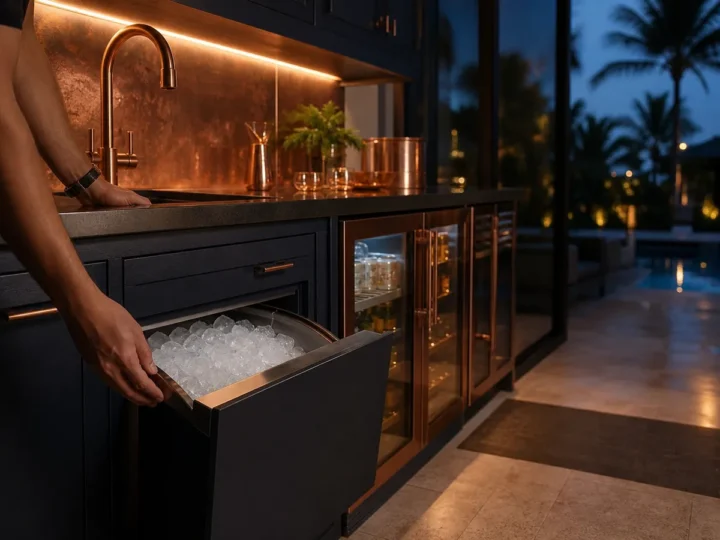
Defrosting and Cleaning a U-Line Undercounter Freezer
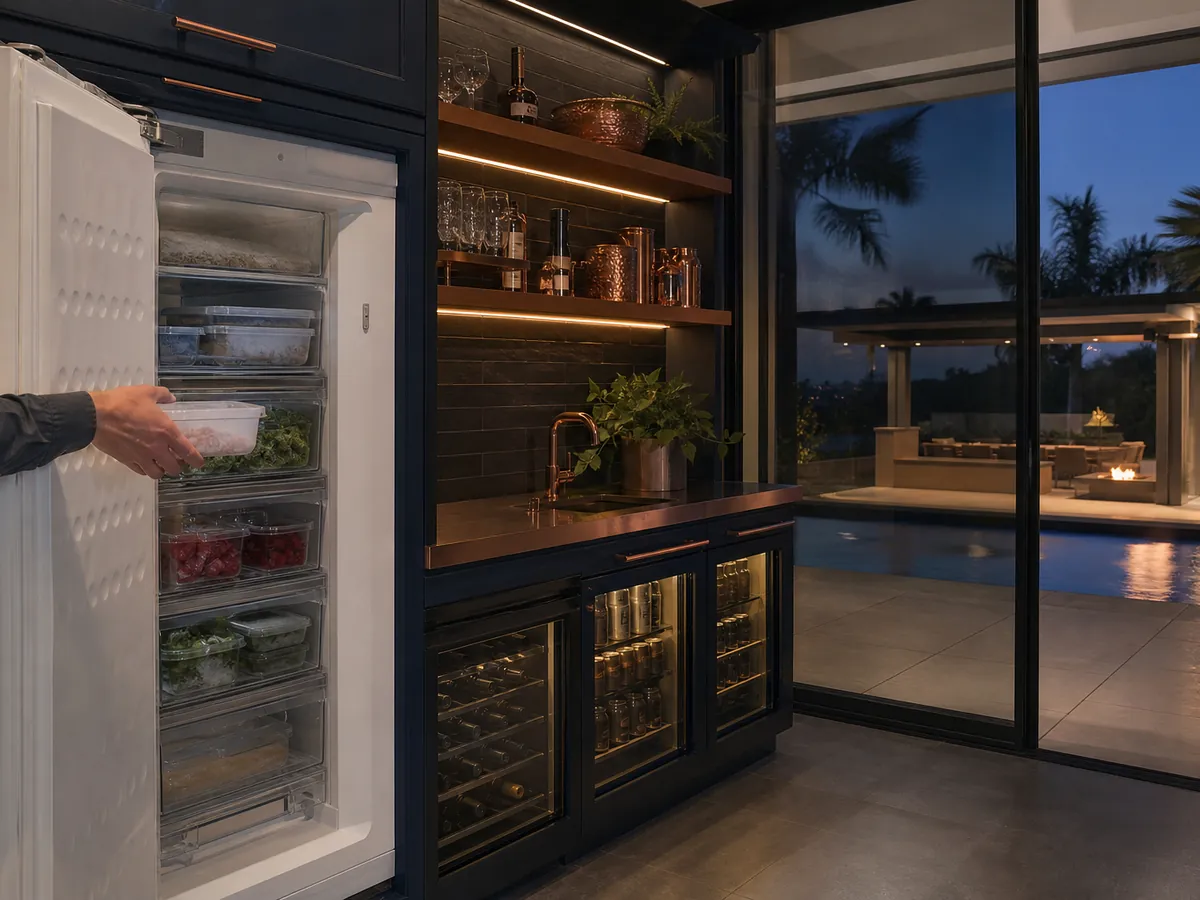
To defrost a U-Line undercounter freezer, move the food to a cold place, unplug the unit, leave the door open and let the frost melt on its own with towels below, then wash the interior, dry it fully and restart. Never chip ice with a knife, screwdriver or heat gun.
Does your freezer need defrosting?
Some freezers manage frost on their own, and others build it up slowly and need an occasional manual defrost. Your use-and-care guide tells you which type you have. If your model defrosts automatically and still shows heavy frost, the cause is usually a door that does not seal, humid air getting in, or a problem inside the system, not a lack of defrosting.
Frost in a thin layer is normal for a manual-defrost freezer. Once it grows thick enough to crowd shelves, stop the door from closing flat, or force the unit to run longer, it is time to act. Florida humidity speeds this up, because every door opening lets damp air in, and that moisture freezes onto the coldest surface.
How do you defrost it safely?
Start with power. Unplug the unit or switch off its breaker, and keep it off until the interior is dry.
- Move the food into coolers or another freezer. Pack it together with ice or frozen packs, and keep a thermometer in the cooler so you can see the real temperature.
- Lay towels at the base and in front of the unit. Meltwater spreads further than you expect on a kitchen floor.
- Leave the door open. Put a shallow pan on a shelf to catch drips if the guide recommends it.
- Let the frost soften and slide off on its own. A bowl of hot water can speed it, as long as you keep it away from plastic liners and electrical parts.
- Lift off loosened ice by hand. Never use a knife, ice pick or scraper made of metal, since a puncture in the liner or the evaporator wall can leak refrigerant and ruin the unit.
- Mop up the water, and check the drain path if your model has one. Do not push anything into the drain.
Do not use a hair dryer or heat gun, because heat can warp liners and plastic parts and leave you near water with an electrical tool. Do not use sprays labeled for defrosting unless your guide approves them.
How do you clean and restart it?
When the ice is gone, wash the interior with warm water and a little mild soap or baking soda on a soft cloth. Wipe the door seal carefully, including the folds, since sticky residue stops the gasket from closing. Rinse with a clean damp cloth and dry everything, because moisture left behind simply refreezes as frost.
Plug the unit in and set it to the temperature in your guide. Give it the time it needs to get cold before refilling it, and check with a thermometer instead of relying on touch. Put food back in an organized way, leaving some room around the back and sides for air movement.
What do different types of frost mean?
| Sign | Likely cause | What you can check | When to call |
|---|---|---|---|
| Even thin frost on the walls | Normal for manual defrost | Note how fast it returns | Not needed yet |
| Frost around the door opening | Seal not closing or damp air leaks | Clean the gasket, check for obstructions | If frost returns quickly |
| Thick ice in a self-defrosting model | Defrost system or drain problem | Confirm the model type in the guide | Soon, after moving food out |
| Ice on the back wall only | Items touching or blocking air | Rearrange contents | If it returns |
| Freezer runs too cold | Setting too low or control issue | Check the set temperature | If setting is right and it is too cold |
When should you call a technician?
Call when a self-defrosting freezer builds thick ice, when frost returns within days of a defrost, when the unit stays warm after a clean restart, or when water leaks outside. In a Tampa Bay summer, a freezer that cannot keep up also puts your stored food at risk, so move perishables to a working freezer while you wait.
Check freezer food with a thermometer after any warm period. If you are unsure how long it was above the safe temperature, follow USDA guidance and discard what the guidance says to discard. We inspect the seal, defrost parts, fans and sealed system, and we explain what we find before any repair is started.
Frequently asked questions
How long does a defrost take?
It varies with how much frost has built up and how warm the room is. Plan on several hours, and prepare cold storage for the food before you start. Do not hurry it with tools.
Can I use a fan to dry the interior?
A small fan blowing room air into the open cabinet can help, as long as the unit is unplugged and the fan sits well away from water. Wipe surfaces with a dry cloth before restarting.
Why does frost return so quickly?
The seal may be leaking, the door may be opened often, or the room may be humid. A thermometer check and a clean gasket come first. A quick return after a careful defrost deserves a service visit.
Is it safe to refreeze food that thawed while I defrosted?
That depends on how warm it got and for how long. Use a thermometer and USDA guidance rather than appearance. When in doubt, throw it out.