Descaling and Cleaning a U-Line Ice Maker in Tampa Bay Homes
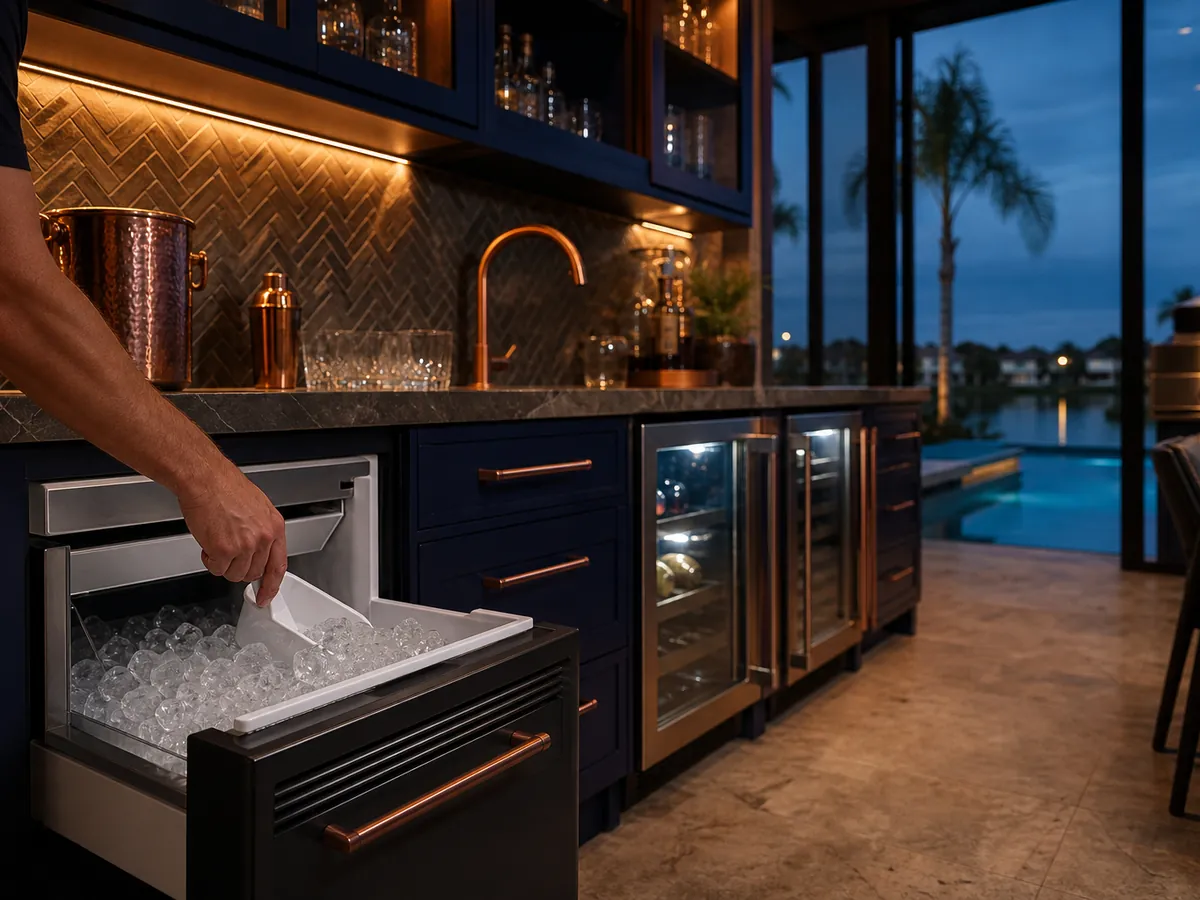
Clean your U-Line ice maker on the schedule in its use-and-care guide, and descale it when you see white or tan crust, cloudy ice or slow harvests. Tampa Bay tap water carries dissolved minerals that leave scale on the water line, the evaporator and the bin. Regular cleaning keeps ice clear and the machine from straining.
Why does an ice maker build up scale here?
Every batch of ice starts as water, and minerals in that water stay behind when the ice forms. Over time they coat the inlet valve screen, the water tray and the freezing surfaces. Scale insulates the surfaces that should be cold and narrows the passages that should be open, so the machine makes ice more slowly or produces ice that looks cloudy and tastes flat.
We do not quote water hardness for any neighborhood, because it varies by source and can change through the year. Homes on private wells in rural parts of the region can also see iron staining or sediment on top of the usual scale. A water filter helps, but it does not replace cleaning.
How do you clean and descale it step by step?
Before you begin, switch the ice maker off at its control or unplug it, and turn off the water supply only if your guide tells you to. Take out the ice and throw it away so cleaner never mixes with ice you plan to serve.
- Let the bin and any removable parts reach room temperature so you can handle them comfortably.
- Remove the bin scoop, shelves and any loose parts the guide lists. Wash them by hand in warm water with mild dish soap.
- Prepare the cleaning solution the guide recommends. Use only a cleaner made for ice makers, and follow the label for dilution. Never mix cleaners, and never use bleach with an acid cleaner.
- Run the machine’s cleaning cycle if it has one, or follow the guide’s steps for circulating solution through the unit.
- Rinse thoroughly by running fresh water through as the guide describes. Smell the interior. Any sharp odor means more rinsing is needed.
- Wipe the interior dry, put the parts back, and restart. Discard the first batches of ice before using it.
Do not chip scale with a knife or screwdriver. Scratches in the interior give scale a place to cling and can damage the liner.
What does each sign tell you?
| Sign | Likely cause | What you can check |
|---|---|---|
| White or tan crust on parts | Mineral scale | Clean and descale per the guide |
| Cloudy or small ice | Dissolved minerals, a tired filter or low water flow | Filter age, supply valve fully open |
| Slimy film in the bin | Bacteria or mold from a warm kitchen | Wash parts and sanitize as the guide allows |
| Musty taste or smell | Residue, stale ice or an old filter | Empty the bin, clean, replace the filter |
| Little or no ice after cleaning | Water inlet blocked or a part that needs service | Confirm water is on and the unit is on |
One caution on sanitizing: not every cleaner is suited to every U-Line model, and the use-and-care guide lists which products to use. If you cannot find your guide, ask us before you pour anything into the machine.
How often should you do it in a humid climate?
Florida humidity matters as much as the water. Warm, damp air encourages slime and mold in a bin that is opened often, and a bar on a lanai or a home that sits closed in summer is especially prone. Look inside whenever you empty the bin, and clean as soon as you see film or smell anything off.
For a regular household, a cleaning cycle a few times a year is a reasonable starting point, but your guide’s interval is the one to follow. If you entertain often or the water is clearly mineral heavy, clean sooner. Cleaning too often costs you only time, while cleaning too rarely lets scale harden.
When should you call a technician?
Call us when cleaning does not restore normal ice, when water leaks onto the floor, or when the machine stops harvesting altogether. Heavy scale can clog the inlet valve, strain the pump on models that have one, and keep the evaporator from freezing properly. Those parts need testing, and sometimes replacement.
Do not open the cabinet to reach the water valve or the drain pump yourself. These parts sit near mains water and wiring. If a leak appears, turn the unit off, unplug it and shut the water supply before you do anything else. We can then test the valve, pump and sensors and tell you what failed before any work starts.
Frequently asked questions
Can I use vinegar to descale my ice maker?
Only if your use-and-care guide allows it. Some models call for a specific ice machine cleaner, and a household acid can damage seals or leave a taste. Check the guide for your model, or ask us before using it.
Why is my ice cloudy even after cleaning?
Cloudiness comes from dissolved minerals and air in the water, not only from a dirty machine. A fresh filter helps. Clear ice on some models depends on a particular design, so the result depends on the unit you own.
Do I need to turn off the water to clean it?
Follow your guide. Many cleaning cycles need the water on so the machine can rinse. Turn the water off and unplug the unit if you plan to open the cabinet or find a leak.
How long should I wait before using the ice after cleaning?
Discard the first batches the unit makes, and taste a cube before serving. If you smell cleaner, run more rinse cycles.