Caring for U-Line Outdoor Refrigeration on a Florida Lanai
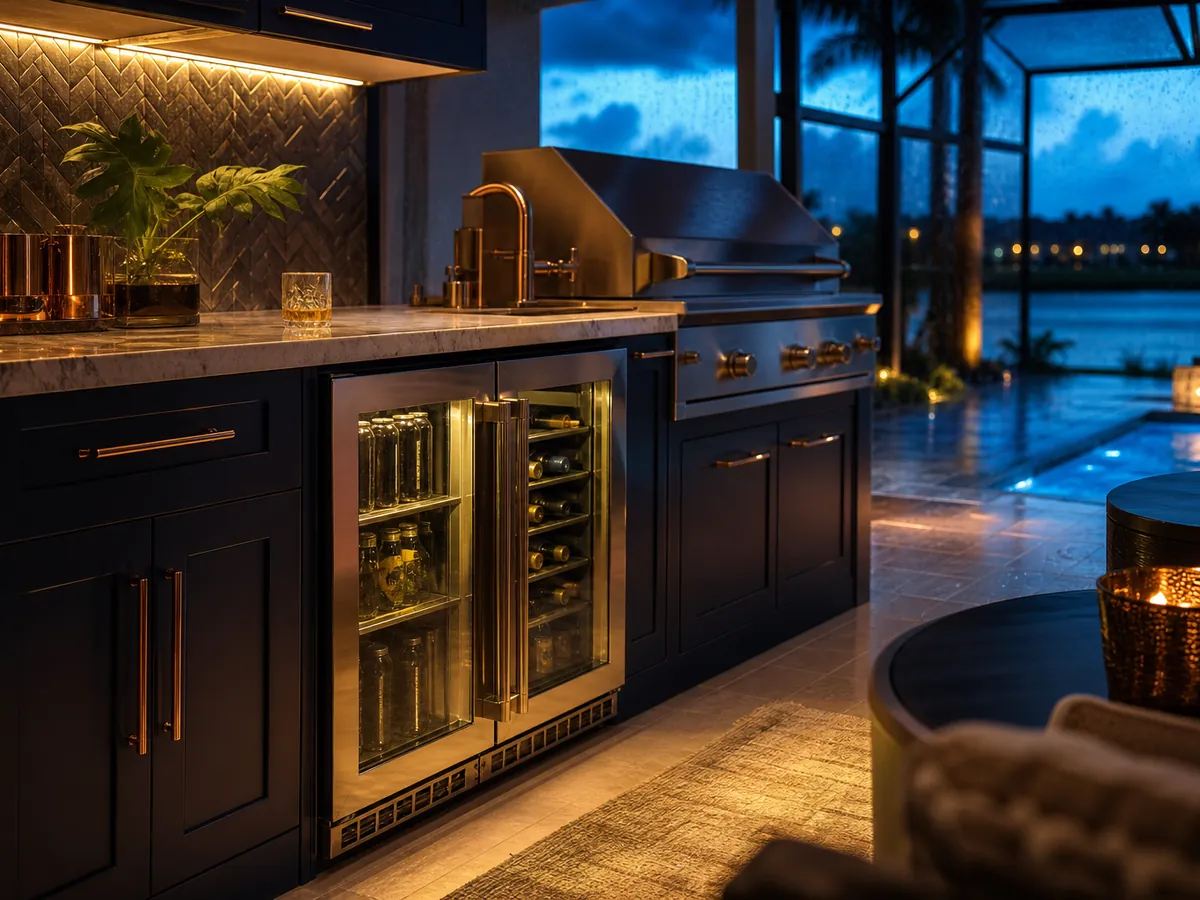
U-Line outdoor refrigeration lasts longest when you rinse salt and pollen from the finish, keep the grille and vents clear, shade the unit from direct sun, and keep its seal clean. In Tampa Bay, a lanai adds humidity, afternoon storms and salt air to the usual wear, so a short routine each season pays off.
What does a lanai do to an outdoor refrigerator?
An outdoor unit lives in conditions that an indoor kitchen never sees. Heat builds under a lanai roof in summer, humidity stays high, and wind-driven rain can reach the cabinet even when a screen is in place. Near the coast, salt in the air settles on stainless steel and slowly pits the surface if it is never washed away.
U-Line makes refrigeration designed for outdoor use, but the label means the unit is built for it, not that it is exempt from care. Your use-and-care guide describes the conditions the unit is rated for and the clearances it needs. A unit tucked into a tight outdoor cabinet with no airflow behind the grille will struggle even when the rest of the design is fine.
How do you protect the stainless finish?
Stainless resists stains but is not immune to them. Salt, sunscreen, grease and standing water all leave marks that spread if they stay put.
- Unplug the unit or switch off its breaker before you clean near vents and the control panel.
- Rinse the exterior with fresh water from a damp cloth, not a spray hose aimed at the grille or the hinge area.
- Wash with mild dish soap and a soft cloth, moving with the grain of the steel.
- Dry with a clean cloth so water spots do not dry into the surface.
- Avoid steel wool, abrasive pads and chlorine-based cleaners. They scratch the finish and can start rust.
Use a stainless cleaner only if your guide approves it. Rust-colored spots usually come from airborne iron or a nearby metal item, and a gentle wash often lifts them early. Deep pits do not come back out, so catching them early matters.
What should you check each season?
| Task | When | Who |
|---|---|---|
| Wash exterior and dry it | Monthly near the coast, otherwise each season | You, with power off |
| Vacuum the front grille and keep vents clear | Each season | You, with power off |
| Wipe the door seal and check it closes flat | Each season | You |
| Look for water pooling under or behind the unit | After storms | You |
| Inspect cord, outlet cover and connection | Before storm season | You look, we repair |
| Test cooling, fan and drain on a hot day | Yearly, or when cooling weakens | Technician |
The power connection deserves a look. An outdoor outlet should be protected as the electrical code requires, and any damaged cord, discolored receptacle or tripped breaker is a reason to stop using the unit and call a licensed professional. Do not repair wiring yourself.
How do sun and rain change how you place and use it?
Direct afternoon sun heats the cabinet, so a unit in full sun runs harder than one in shade. If your layout allows, shade the front with the lanai structure, an awning or a screen, but never block the grille. Keep plants, cushions and covers away from vents, and do not wrap the unit in a tarp that traps heat.
If you close up the lanai for hurricane season or a long trip, follow the preparation steps in the guide, including emptying and cleaning, and prop the door as it advises so odor and mold do not build. A closed, damp, warm cabinet grows mold quickly in Florida.
When should you call a technician?
Call when the unit stops holding the temperature you set, when ice builds on the back wall, when you hear a fan scraping or the compressor cycling without end, or when water pools beneath it. Also call after a storm surge or flooding if water reached the base. Do not plug in a unit that has been under water.
We check the sealed system, fans, controls and drain on outdoor units, and we explain what we find in plain terms before any work starts. We do not recommend opening panels or working on refrigerant lines yourself.
Frequently asked questions
Can I leave outdoor refrigeration running through the summer?
Yes, if the unit is rated for outdoor use and has clear airflow. Keep it shaded where possible, clean the grille, and watch the interior temperature during the hottest weeks.
Why is there rust on a stainless unit?
Salt, grit or contact with other metal can leave surface rust on stainless. Wash the area early with mild soap and dry it. Deep pitting cannot be reversed, so frequent washing near the coast helps.
Is it safe to plug an outdoor unit into any outlet?
No. Use a properly installed outlet suited to outdoor locations, and do not use extension cords as a permanent solution. A licensed electrician can confirm your outlet if you are unsure.
Should I cover the unit during a hurricane warning?
Follow the guidance in your use-and-care guide about securing or moving the unit. Do not wrap it tightly, since trapped moisture and heat can harm the cabinet and finish.