U-Line Wine Refrigerator Not Holding Temperature: Causes
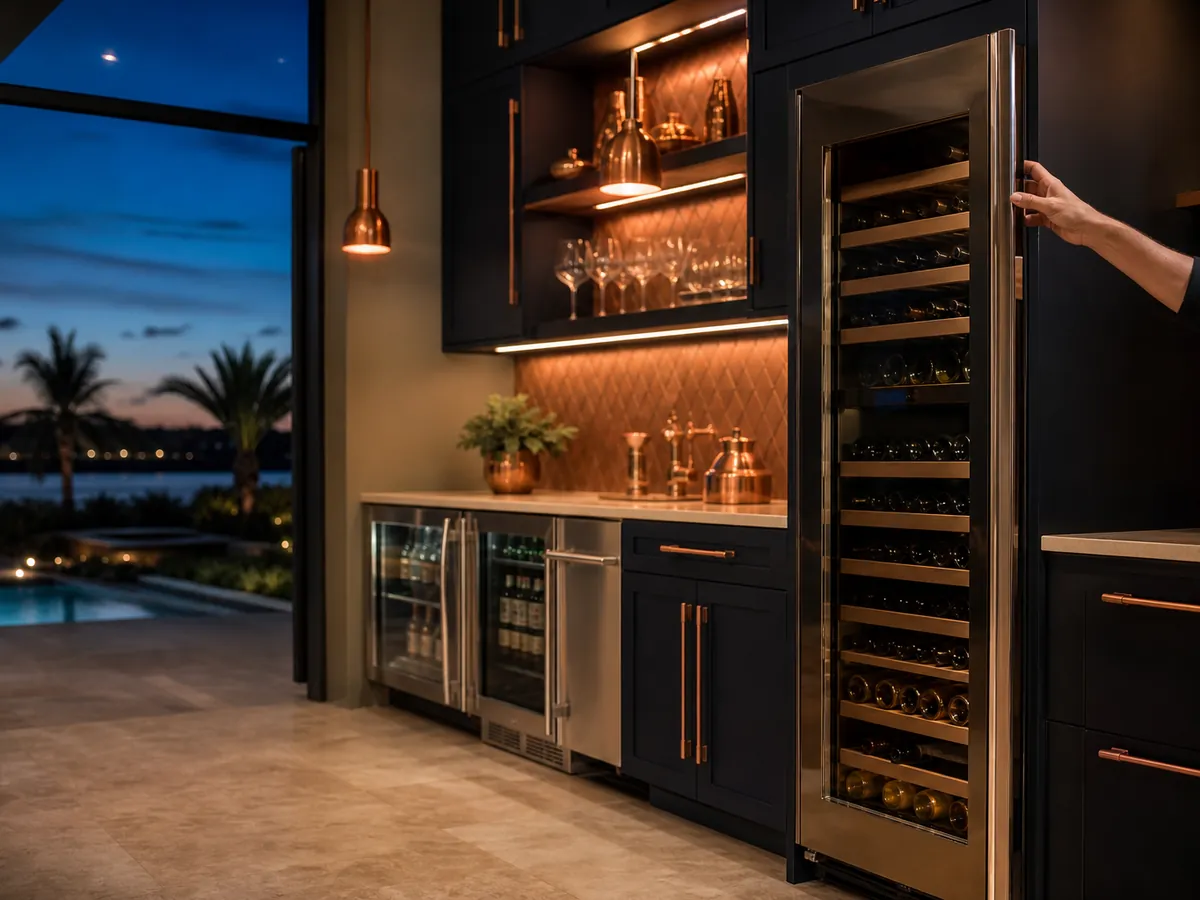
A U-Line wine refrigerator that drifts from its set temperature usually has an airflow, door or setting problem rather than a failed part. Check that the front vent is clear, the door seals, the zone setpoints are right and the unit is not sitting in direct heat. Then verify with a thermometer placed among the bottles.
Why does a wine refrigerator struggle to hold temperature?
A wine refrigerator works gently, holding a steady cool temperature rather than freezing, so it responds to heat quickly. A bright afternoon window, a hot appliance in the next cabinet or a sun-baked lanai can push it beyond what it can control.
Florida summers make it harder. A hot room raises the load on the cooling system, and constant door opening for a party adds moist air that has to be removed.
Does placement and the front vent matter?
Yes. U-Line built-in wine units draw air in through the front vent at the base. If you added trim, a basket or a toe-kick panel in front of it, the unit may overheat and lose control. Switch the unit off, then keep the vent clear and vacuum it with a brush attachment.
A freestanding or outdoor-rated model has different clearance rules, so use your use-and-care guide for spacing. Never place a unit in a closed cabinet unless the manual allows it.
How do the door seal and zone settings come into this?
Check the gasket for gaps by closing a strip of paper in the door. Clean it with warm water and mild soap. A door that does not close fully because bottles stick out, or a shelf pulled too far forward, lets warm air pour in.
On dual-zone models, each zone has its own setpoint, and the zones can interact. If one zone is set much colder than the other, the cold zone can be hard to hold. Set both back to the temperatures in your guide, wait a day and measure.
| Sign | Possible cause | What you can check | Next step |
|---|---|---|---|
| Too warm everywhere | Blocked vent or hot room | Vent, room temperature | Clear and retest |
| One zone drifts | Zone settings clash | Set both zones sensibly | Wait 24 hours |
| Condensation at the door | Seal gap or humid air | Gasket, door closure | Clean the gasket |
| Display fluctuates | Frequent door use | Limit opening | Observe |
| Runs nonstop | Heat load or cooling problem | Placement, thermometer | Technician |
Humidity matters as well. Very dry air can dry out corks over time, while constant damp can affect labels and cause condensation on the glass. A steady cabinet that stays closed most of the time is the best defense. If you open the door often, group the bottles you serve most in one place and leave the others undisturbed. Keep the bottles away from the rear wall and the vent so air can circulate around them.
What about temperature swings and your wine?
Rapid or large swings are harder on wine than a steady temperature that is slightly off. Place a thermometer among the bottles, not just in the air near the door, and log it for a day. Leave the door closed while you watch.
If the temperature climbs during the afternoon and returns overnight, the cause is probably the room or the vent. If it never reaches the setting, a cooling problem is more likely.
Before you call, write down the setpoints for each zone, the temperature the thermometer shows, how long the unit has been running without a break, and whether the front vent is warm or cool. Those details help us arrive with a plan. During an outage, keep the door closed so the cold stays inside, and check the temperature when power returns.
When is service the right next step?
Call if the vent is clear, the door seals, the settings are correct and the unit still cannot hold temperature, or if it runs constantly with a warm cabinet. We check airflow, fans, sensors and the sealed system in order, and we tell you what we found before any repair.
If you are protecting a collection, move the bottles somewhere stable while you wait, and do not move the unit yourself while it is running.
Place the unit on a firm, level floor with the clearance your guide specifies. A unit that rocks can bump the door and shift bottles, and a unit pushed tight against a wall can lose airflow.
Frequently asked questions
What temperature should my wine be kept at?
Use the range in your use-and-care guide, since serving and storage temperatures differ by wine type. Keep the temperature steady rather than chasing small changes.
Can a wine refrigerator be used on a lanai?
Only a model made for outdoor use belongs there. An indoor model will struggle with heat, humidity and salt air.
How soon should I react to a warm reading?
Check the basics immediately and watch the thermometer for a day. A reading that keeps climbing needs service sooner, because heat is hard on bottles.
Do I need to defrost a wine refrigerator?
Check your guide. Some models clear frost on their own, and heavy frost points to a door seal or humidity problem.