Why Your U-Line Undercounter Refrigerator Runs Warm in Summer
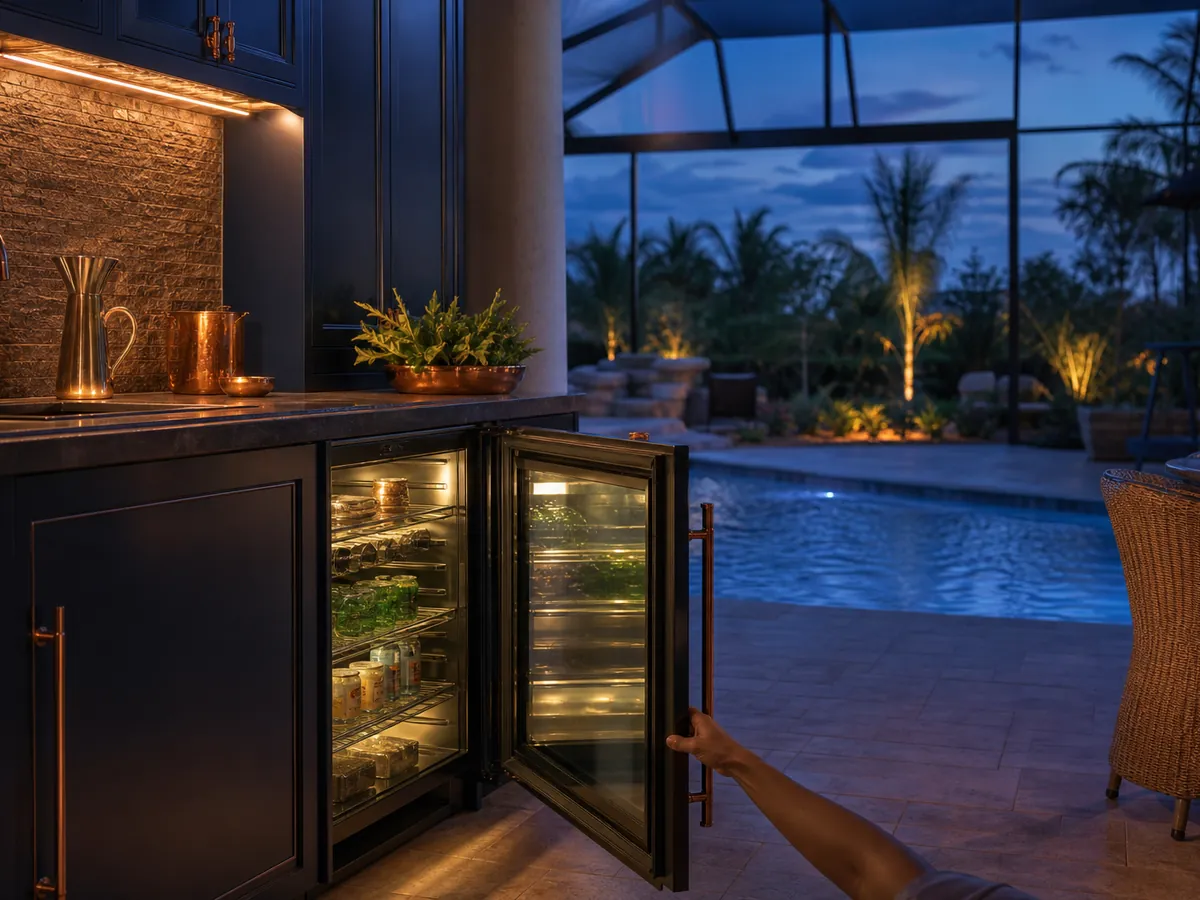
A U-Line undercounter refrigerator that runs warm in a Florida summer is most often fighting its surroundings, not failing. The front grille has to pull in and push out room air, so a blocked grille, a hot cabinet, a door that does not seal or a changed setpoint can all raise the temperature. Check those first, then measure with a thermometer.
Why does a U-Line undercounter refrigerator run warmer in summer?
An undercounter model gives off the heat it removes from your food through the front grille at the bottom of the unit. When the kitchen is hot and humid, that air is already warm, so the cooling parts have to run longer to do the same job. In a Tampa Bay home where the air conditioning cycles through the afternoon, the room temperature swings and the refrigerator follows it.
Humidity adds a second load. Every time the door opens, warm moist air comes in, and the unit has to cool and dry it. A refrigerator that held temperature in January can look weak in August simply because the demands on it changed.
What should you check first at the front grille and cabinet?
Start with safety: you are only going to look and wipe, so there is no need to touch wiring. If you plan to vacuum the grille, switch the unit off at its control or unplug it first, and let it sit a few minutes.
A built-in U-Line is designed to breathe through the front grille, so the grille must stay uncovered. Look for a storage basket pushed against it, a toe-kick panel added during a remodel, or a layer of dust and pet hair behind the grille openings. Vacuum the grille with a soft brush attachment. If the unit sits inside a tight cabinet with no clearance at the front, a technician should look at it, because the airflow path is built into the unit.
How do the door seal and the settings affect temperature?
The door gasket is the soft strip around the door. A strip of paper pinched between the door and cabinet should drag slightly when you pull it out. If it slides freely in one spot, the seal is not touching there. Wipe the gasket with warm water and a little mild dish soap, dry it, and check that the door closes fully without bumping a bottle or a shelf.
Then look at the setpoint. Someone may have pressed the control while cleaning, or the unit may have been turned down for a party and left there. Compare the display with the setting described in your use-and-care guide, and give the refrigerator several hours after any change before you judge it. Also confirm the unit is level, since a tilted cabinet can keep the door from closing evenly.
What do the common signs usually point to?
Use this table to match what you see with where to look. It narrows the cause; it does not replace a measured temperature.
| What you notice | Possible cause | What you can check | Next step |
|---|---|---|---|
| Warm all day, grille dusty | Restricted airflow | Unplug, then vacuum the grille | Call if still warm after cleaning |
| Warm only after parties | Heavy load and frequent door opening | Load in smaller batches and pre-chill drinks | Monitor for a day |
| Gaps or sweating at the door edge | Door seal not touching | Clean the gasket, test with paper | Call if the gasket is torn or stiff |
| Display shows a different setpoint | Setting changed | Compare with the use-and-care guide | Reset and wait several hours |
| Runs constantly, cabinet warm | Hot room or tight cabinet | Check room temperature and front clearance | Call for a ventilation check |
When is it a job for a technician?
If the grille is clean, the door seals and the setting is right, but a thermometer still shows the compartment above 40°F after a full day, the cause is probably inside the sealed cooling system or the controls, and no owner step will fix it. We inspect the airflow path, the condenser area, the fan and the temperature sensing before suggesting any part.
Do not add a fan or open the back of a built-in unit yourself. And do not trust perishable food that stayed above 40°F for more than two hours. Follow USDA guidance and use a thermometer and the clock, not how it looks or smells. If you are unsure, discard it.
Frequently asked questions
Is it normal for the front grille to feel warm?
Yes. The grille is where the unit releases heat, so mild warmth during a running cycle is expected. It should not be blocked by anything stored in front of it, and it should not feel hot to the point of discomfort.
Should I move my U-Line closer to the air conditioning vent?
No. The unit needs open front clearance, not cold room air blowing on it. If the room itself is very hot, improve the kitchen cooling or the cabinet ventilation rather than the placement of the vent.
How long should I wait after changing the temperature setting?
Give it several hours, and longer for a full load. Check with a refrigerator thermometer in a glass of water rather than relying on the display alone, and look again the next morning.
Could a power surge during a storm cause this?
It can. Summer thunderstorms bring brief outages and surges that may reset a setting or interrupt a cycle. Check that the unit is on, the display is normal and the setpoint is where you left it before assuming a part has failed.