U-Line Outdoor Refrigerator on a Hot Florida Lanai: Fixes
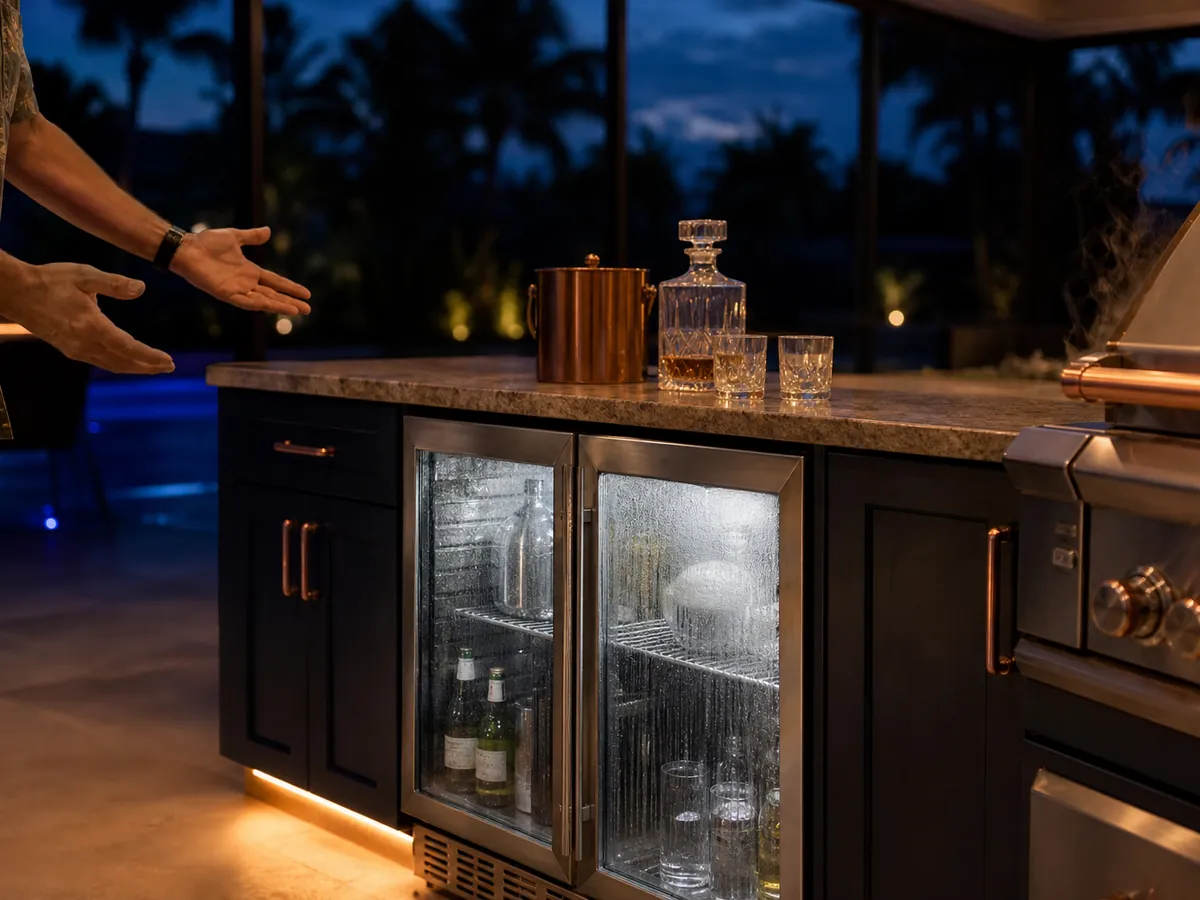
A U-Line outdoor refrigerator that struggles on a Florida lanai is usually working against sun, trapped heat and frequent door openings. More shade, clear airflow, a sensible load and a clean grille help a lot. If the cabinet still cannot cool after those changes, the cooling system needs a technician.
Why does heat on the lanai hurt an outdoor refrigerator?
Even a model made for outdoor use has to move heat out of the cabinet and into the air around it. When that air is already hot, the unit works harder, runs longer and has less margin. A lanai can make this worse, because screens, walls and a roof trap hot air and reduce the breeze that would carry heat away.
Direct sun on the cabinet is another problem. Sun on a dark surface adds heat, and the door gasket can soften and lose its seal over time. A spot that gets afternoon sun in July is a harder place to live than one in morning shade.
How much shade and airflow does it need?
Check your installation guide for the clearance on the sides, back and top, and keep those spaces open. Do not wedge the unit into a tight outdoor kitchen cabinet unless it is designed for that. If the front grille is the intake and exhaust, nothing should sit in front of it, and plants, cushions and cover material should stay away.
If sun hits the unit, consider an awning, a screen or a relocation that your outdoor-kitchen installer approves. Do not drape fabric over the unit or the grille. Switch off the unit and clean the grille with a soft brush when you see leaves, pollen, dust or salt film.
Do door habits and loading matter more outside?
Yes. Outdoor entertaining means the door opens constantly, and each opening lets in hot, wet air. Keep drinks you use most near the front, and stage food in a cooler for a party rather than loading the refrigerator and opening it all afternoon. A full cabinet of cold items holds temperature better than an empty one, but not if the air cannot move.
Load warm drinks in small batches. And close the door fully every time, since a bottle on the gasket can leave a gap that you do not notice from outside.
| Condition | Effect on the unit | What you can do | Next step |
|---|---|---|---|
| Afternoon sun on the cabinet | Warmer interior, longer running | Add shade, avoid covers | Re-measure after a day |
| Tight cabinet | Heat has nowhere to go | Check clearances | Installer or technician |
| Dirty grille | Poor heat rejection | Power off, brush it clean | Call if no change |
| Frequent door use | Warm humid air enters | Stage drinks in a cooler | Observe |
| Salt film, corrosion | Gasket and hinge wear | Rinse with fresh water, dry | Technician for parts |
What about storms, salt air and humidity?
Summer storms bring outages and surges, and a lanai refrigerator may have no protection against them. A surge protector rated for the appliance, installed by a licensed electrician, is a reasonable step. After an outage, keep the door closed, then check temperature with a thermometer once power returns.
Salt air near the coast speeds up corrosion of hinges, screws and metal trim, and humidity can encourage mildew on gaskets. Wipe the cabinet and gasket with fresh water and mild soap, dry them and check that the door still closes evenly. Before a hurricane, empty the unit if you expect an extended outage, leave the door ajar and keep the electrical supply off until conditions are safe.
The outside of the cabinet should be rinsed gently, with no pressure washer and no water aimed at the grille or the electrical area.
Think also about the circuit. A lanai outlet should be protected and recommended in the installation instructions. If the breaker trips in a storm or the outlet feels warm, stop using the unit and call a licensed electrician before anything else. A trip that repeats is not a refrigerator setting to adjust.
When does a lanai refrigerator need service?
Call if the cabinet stays warm after you have improved shade, cleared the grille and reduced door openings, if it runs nonstop, or if the display shows a repeated alarm. We check airflow, fans, the gasket and the cooling system, and tell you whether the location is the real issue.
Do not trust perishable food that has been above 40°F for more than two hours. Use a thermometer and the clock, follow USDA guidance and throw out food you are unsure about.
Seasonal residents who close a Florida home for months should empty the unit, clean it, switch it off at the breaker and leave the door ajar so mildew cannot grow. When you return, let it run and reach temperature before you load it.
Frequently asked questions
Can any U-Line refrigerator go outside?
No. Only models made for outdoor use belong on a lanai or patio. An indoor model is not built for temperature extremes, rain or salt air.
Should I cover the refrigerator when I leave for the summer?
Follow your guide. Empty it, clean it and leave the door ajar if the manual allows so the interior dries. Do not cover the grille in a way that traps moisture.
How often should I clean the grille outdoors?
Check it regularly and clean it whenever you see dust, pollen or debris. Outdoor units collect more of it than kitchen units.
Is it okay to plug it into an extension cord?
No. Use a proper outlet recommended in the installation instructions, and have a licensed electrician fix any outlet problem.